From Pilot to Specs: Scaling Climate Solutions in the Built Environment
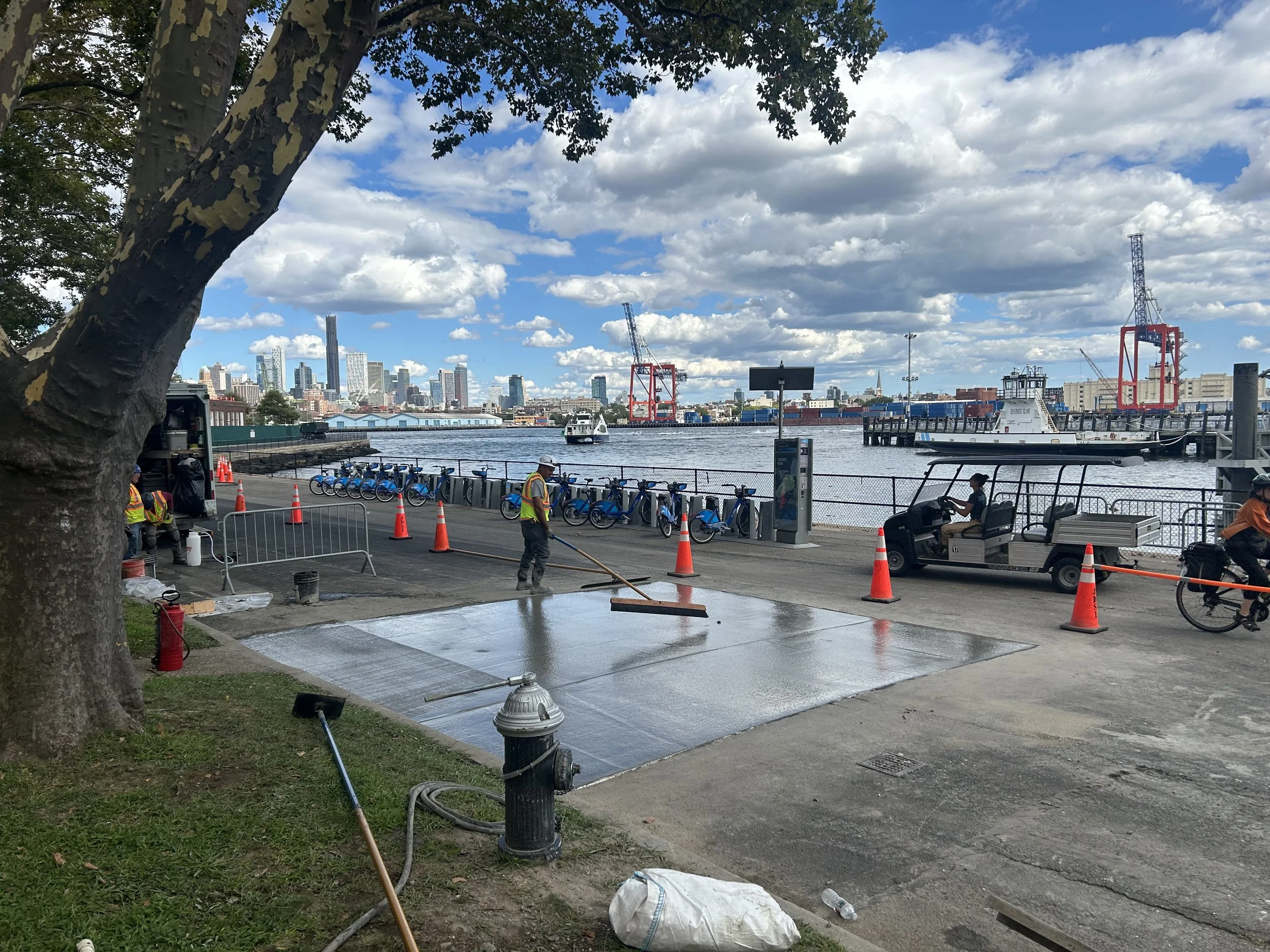
The Exchange’s future campus on Governors Island, designed by Skidmore, Owings and Merrill (SOM), will serve as a living laboratory where climate solutions are tested, validated, and ultimately scaled for broader application in New York City and beyond. Because concrete is used extensively throughout the campus and has a significant carbon footprint, it presents one of the greatest opportunities to reduce embodied carbon. Recognizing that opportunity, The Exchange and SOM specified a new, blended bio-based cement—the ProZERO™ blend by Prometheus Materials—to replace typical concrete mix in portions of the campus’ outdoor walkways, plazas, and other paved areas.
What can art teach us about climate solutions?
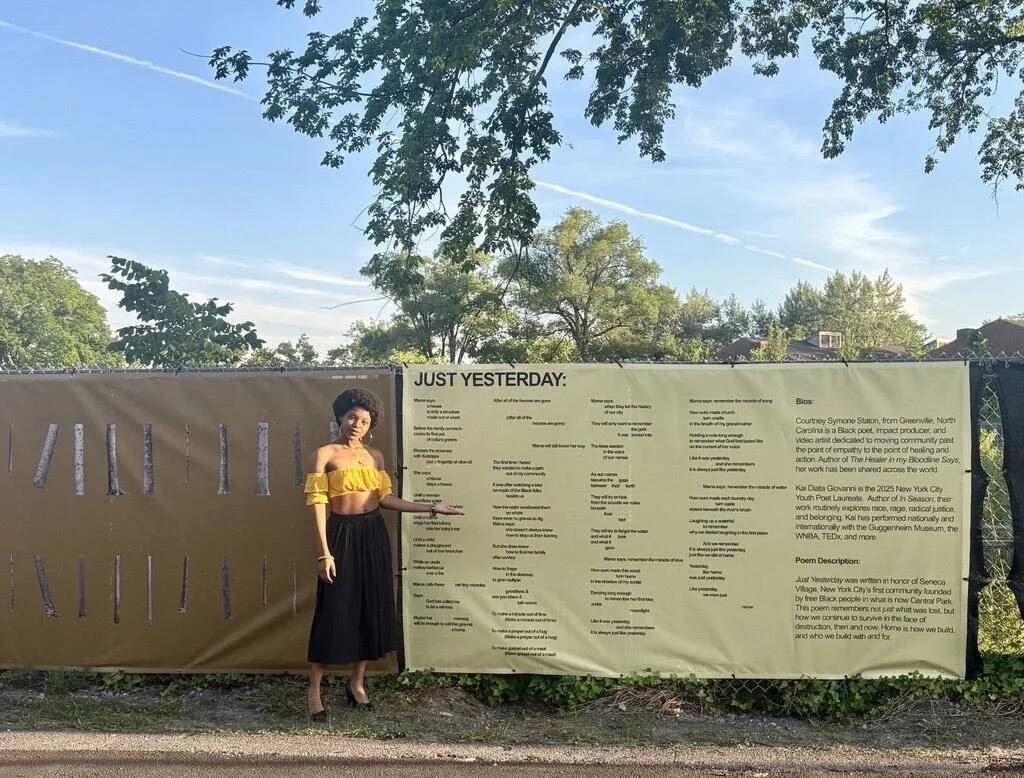
What can a poet, a photographer, and a sustainability designer teach us about climate solutions? More than you might think. On Governors Island, A Forest Deconstructed transforms a construction fence into a space for reflection, inviting visitors to explore the connections between forests, memory, materiality, and the future of the built environment. By pairing art with the story of a future mass timber campus, the exhibition offers a new way to engage with climate innovation—one rooted in curiosity, emotion, and human connection.
As climate solutions become more complex, communicating their value is just as important as developing the technologies themselves. Through conversations spanning poetry, photography, architecture, and sustainability, this piece explores how creativity can help make climate action feel tangible, personal, and inspiring—and why solving the climate crisis will require collaboration across disciplines as much as scientific and technical expertise.
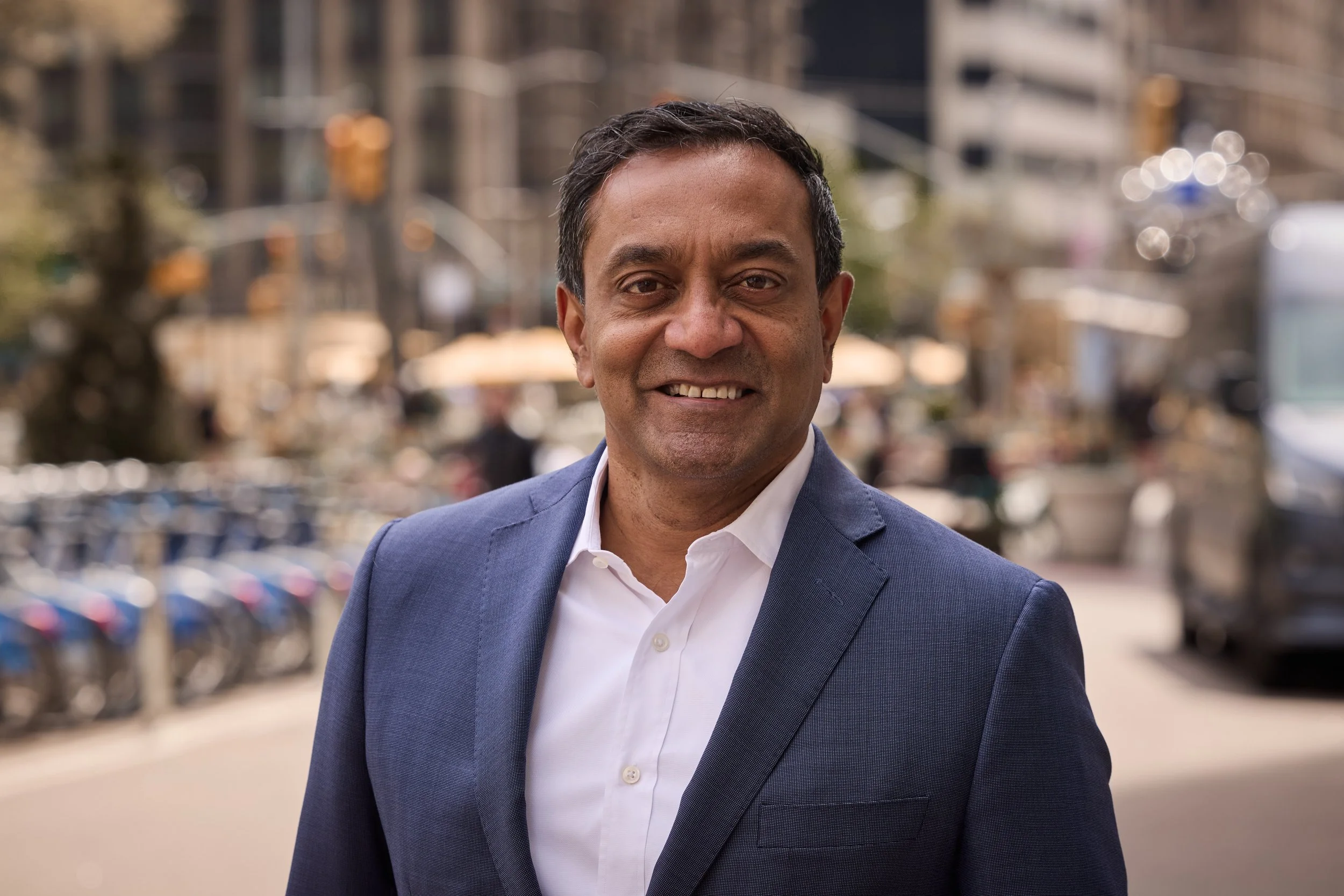
Dr. M. Sanjayan Named CEO of The New York Climate Exchange
A new chapter begins for The New York Climate Exchange—and for climate leadership in New York City.
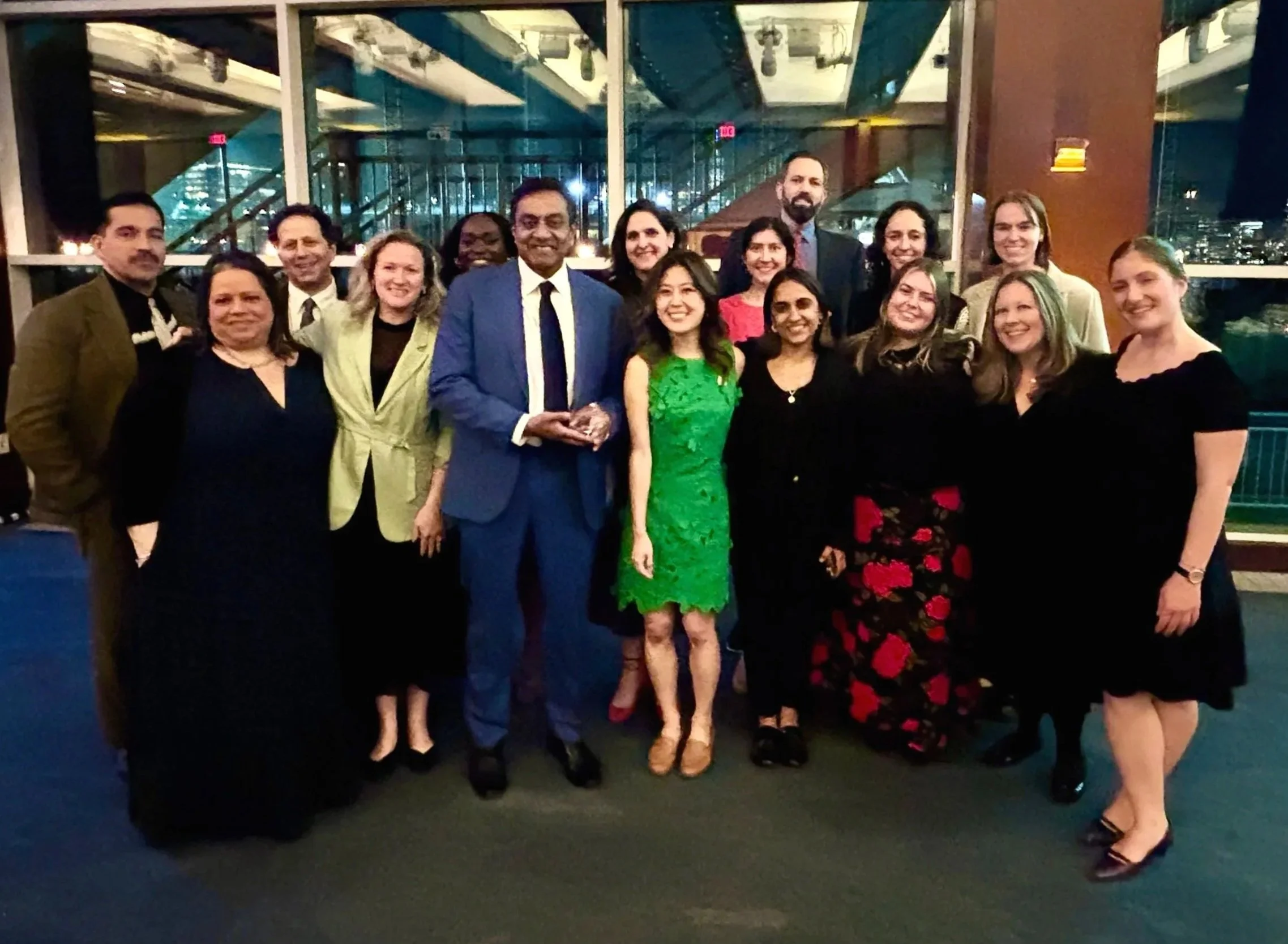
Today, The Exchange announced that Dr. M. Sanjayan will serve as its next Chief Executive Officer, marking a pivotal moment in The Exchange’s mission to accelerate climate solutions through research, education, workforce development, innovation, and community partnership. A leading conservation scientist who has served as Chief Executive Officer at Conservation International, Sanjayan will guide The Exchange as it advances its vision for a transformational climate campus on Governors Island in New York Harbor.
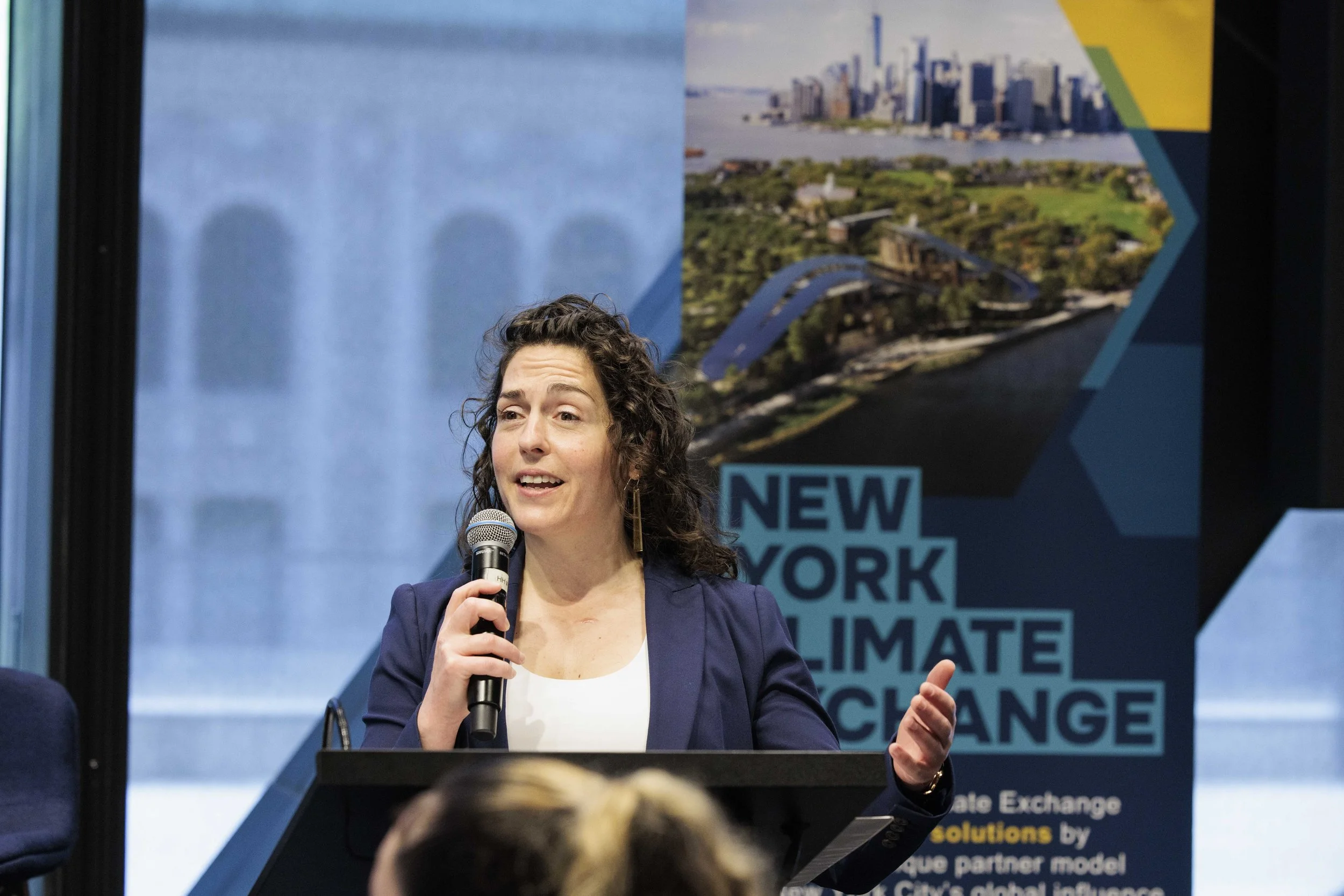
Turning Climate Data into Action: Key Takeaways from the 2026 Climate Solutions Summit
On April 17, The New York Climate Exchange convened partners, policymakers, data practitioners, and community leaders for its second annual Climate Solutions Summit NYC. This year’s summit was focused on the urgent need to close the gap between climate data and real-world action.
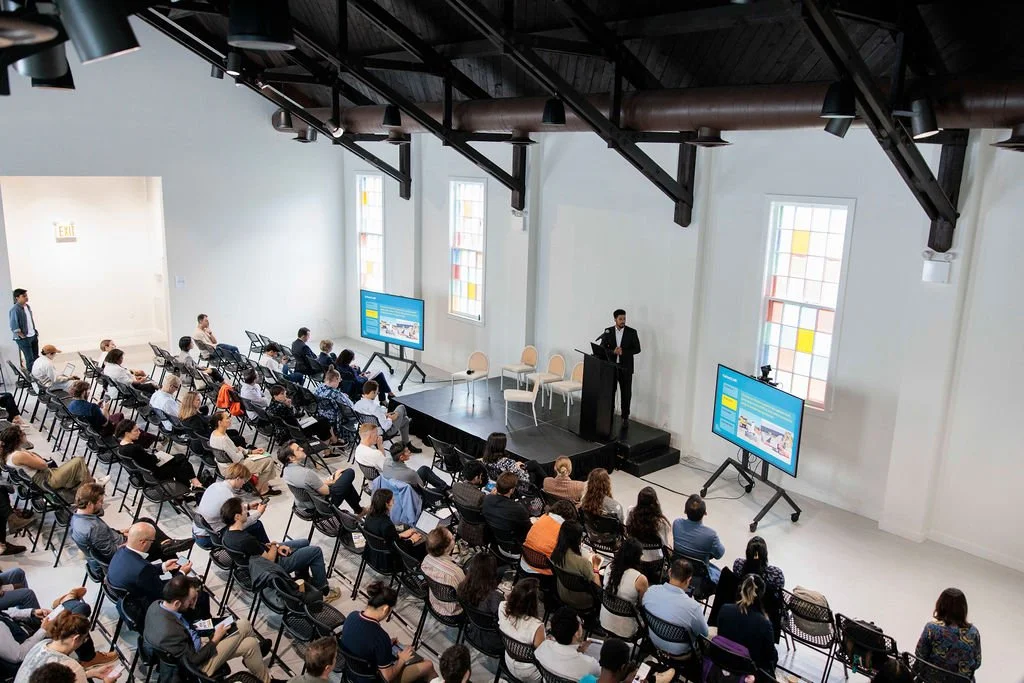
Climate Tech Fellows Showcase: Advancing Innovation & Collaborating for Impact
In February 2026, The New York Climate Exchange wrapped up our inaugural cohort of the Climate Tech Fellowship closed with a virtual showcase — a chance for the eight fellows to present their work, reflect on the past six months, and share what comes next.
The fellowship recruited early-stage innovators from The Exchange’s university partner network and supported them across three focus areas: urban and coastal resilience, climate data, and energy and decarbonization. The resulting cohort hailed from Georgia Tech, Duke, NYU, CUNY, and Stony Brook University. Over the course of the program, fellows received one-on-one mentorship, completed structured modules on commercialization and customer discovery, and forged connections to investors, legal advisors, and potential partners.
The virtual showcase in February marked the end of the program, drawing investors, researchers, scientists, and organizations across the tech ecosystem. The program opened with a conversation with Jesse Lou, Co-Founder and CEO of Recursion Works, underscoring the role of techno-economic analysis (TEA) as part of a climate founder’s toolkit and an essential means to establish and validate economic feasibility for scientific research. Then, each fellow highlighted progress made on their innovation during the fellowship. The program ended with virtual breakout rooms that facilitated conversation and networking between fellows and attendees.
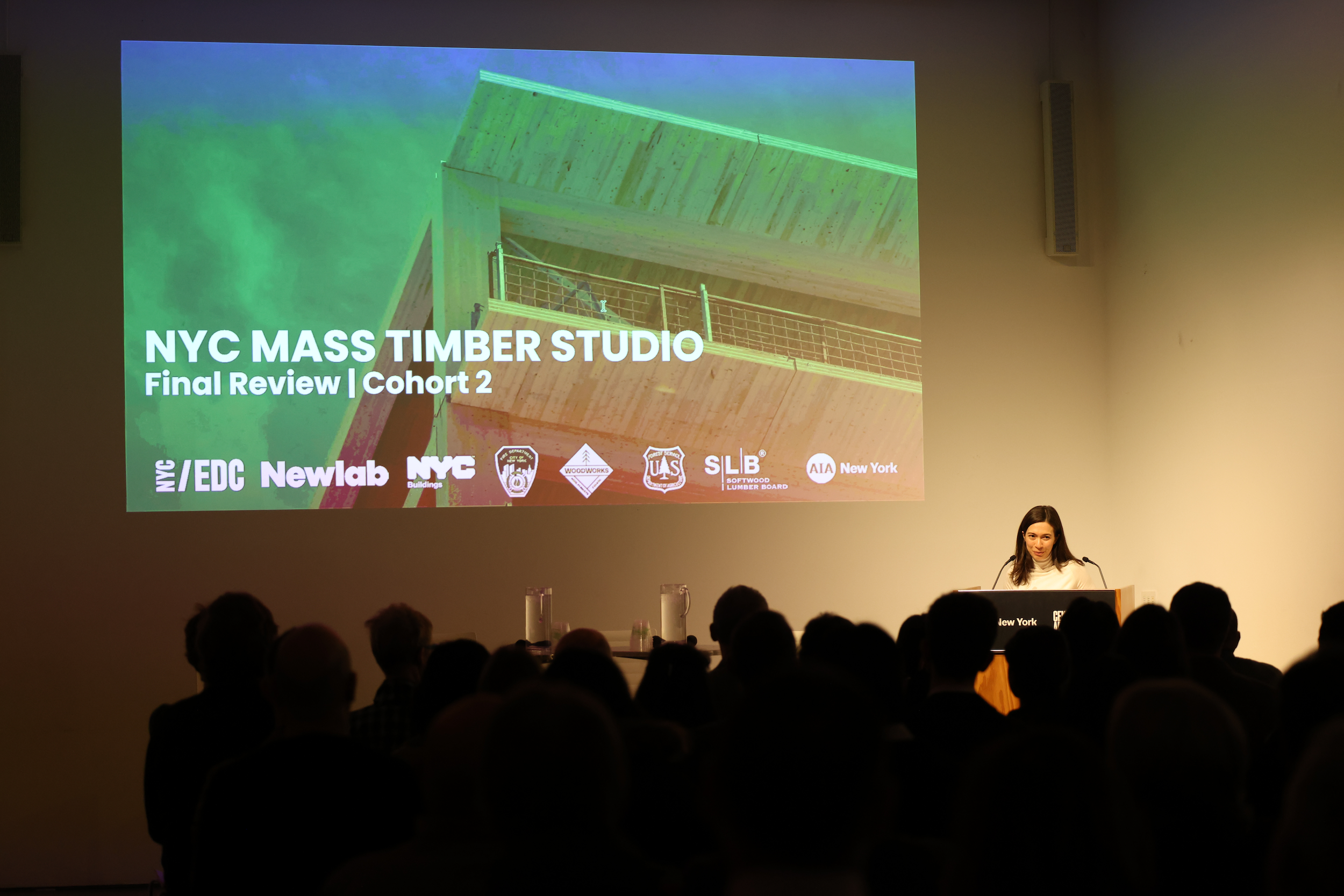
Making Mass Timber Buildable in NYC: What the NYCEDC-led Mass Timber Studio Enabled
Launched in 2023 by NYCEDC, the New York City Mass Timber Studio is a multi-agency effort providing the tools, expertise, and feedback loops needed to advance mass timber projects across the five boroughs. The Studio’s two cohorts have supported 14 projects totaling more than 850,000 square feet of potential mass timber development. Many of these projects are located in environmental justice communities, with project life-cycle assessments reporting average reductions of 30-40% in global warming potential compared to conventional structural systems. Unlocking mass timber’s potential to reduce carbon, shorten construction timelines, and lower project costs requires an ecosystem-driven approach. The industry needs to have a workforce that understands how to design, plan, and construct a mass timber project, and the City needs to have regulators who can confidently assess the project’s structural and fire safety.
The Studio is one example of how to bridge this gap between plan and implementation. At its core, it’s a structured forum that brings project teams and regulators together to overcome barriers to safe mass timber construction in New York City—while training all stakeholders who will engage with a mass timber project across its lifecycle.
How a New York University class met the climate crisis: NYU SPS Real World x The Exchange
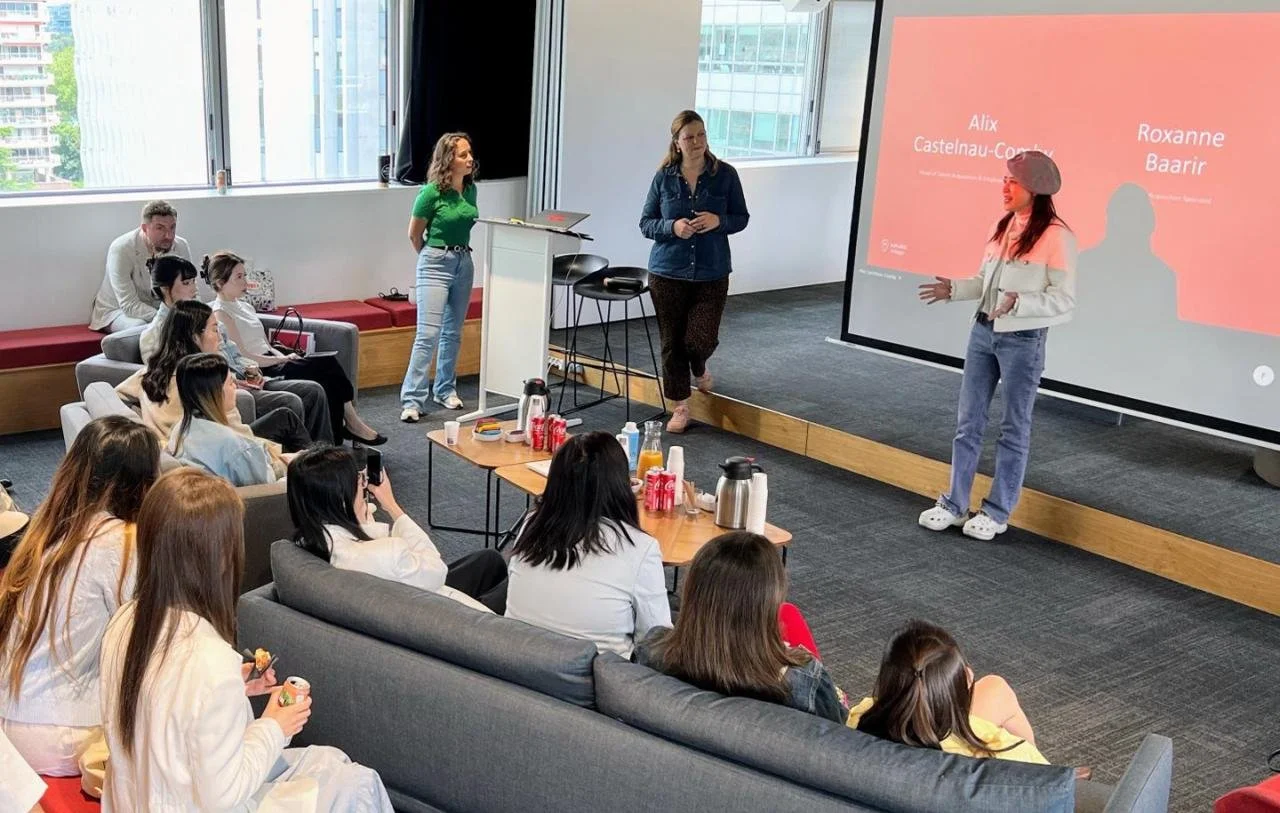
Last fall, The New York Climate Exchange’s (The Exchange) collaborative model entered the university classroom. 18 students enrolled in a “Real World” course through NYU's School of Professional Studies (NYU SPS). The goal? Tackle an interdisciplinary challenge, or “wicked problem”, in service of The Exchange's mission—advancing climate solutions that are equitable, scalable, and grounded in the realities of urban life.
Where climate breakthroughs begin: from university labs to global market
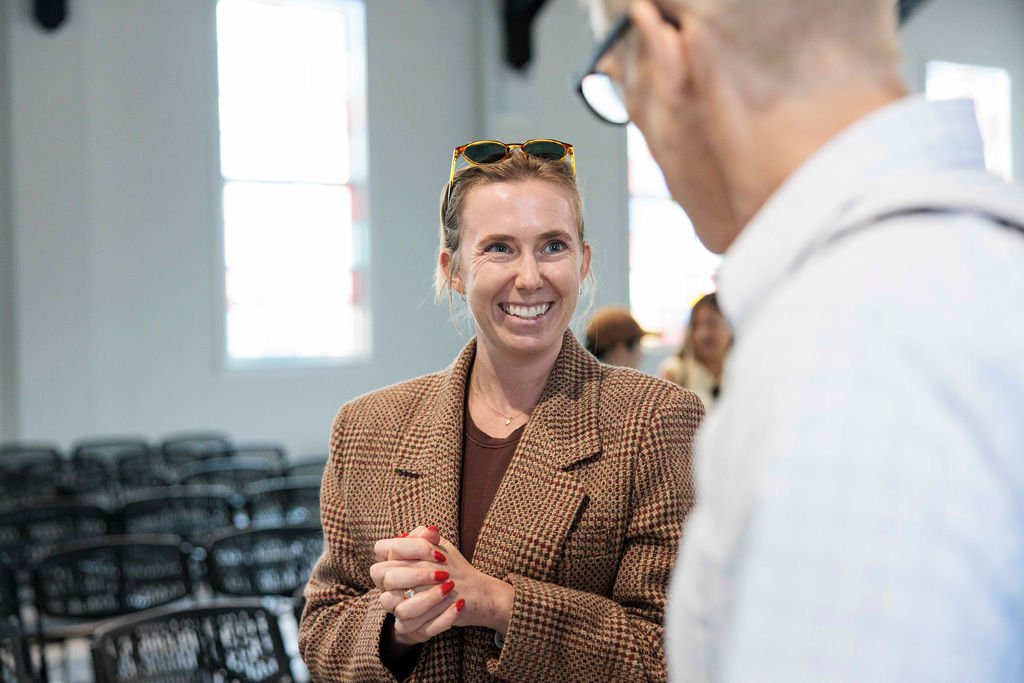
Breakthrough climate solutions often begin with a question that demands years of testing, refining, and iterating before they can become the basis for a full-fledged product or company. This stage, often called the Research and Development (R&D) stage involves founders or researchers, who are often PhDs, post docs, and graduate students, validating scientific assumptions, developing prototypes, and testing feasibility. From there, they move on to understanding different user types and real-world deployment cases for their burgeoning solutions which often emerge directly from their academic research.
While early-stage R&D can be time consuming and costly, it forms the essential groundwork for turning ideas into vetted solutions. Universities play an essential role in providing what real-world markets cannot: time and space to explore uncertainty, and the resources to double down on promising ideas. These pathways from research to entrepreneurship are deeply embedded within The Exchange’s Climate Tech Fellowship and its broader university network.
Transforming an NYC island into a living lab for Climate Tech solutions
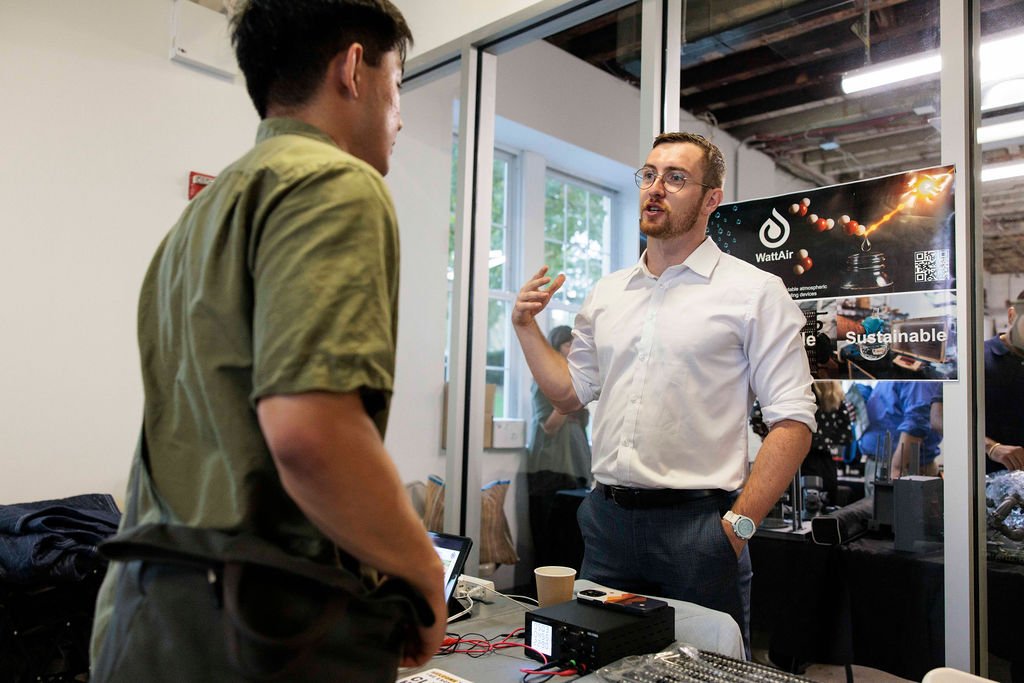
Because climate impacts touch every aspect of society, there’s now more opportunity than ever for climate tech to play a transformative role across nearly every sector, from the food we eat, to the cars we drive, to how we build our homes. As the pace of technological advancement continues to accelerate, the opportunities for real world application are promising. Now is the time to ensure that these technologies are harnessed to respond to the greatest challenges we face.
Regularly recognized as the #2 technology hub globally, NYC has cemented its reputation for innovation across established sectors including finance, media, and healthcare. Now we are in the midst of putting NYC on the map as a one-of-a-kind hub of climate resilience, committed to applying our tech capacity to ensuring a more sustainable future for all.
The Exchange serves as a bridge between research, innovation, and implementation, creating pathways for communities to transform how cities mitigate and adapt to climate impacts. Climate tech is a critical piece of that puzzle.