Making Mass Timber Buildable in NYC: What the NYCEDC-led Mass Timber Studio Enabled
Written by Elifmina Mizrahi, New York Climate Exchange, and Gizem Karagoz, NYCEDC
The New York Climate Exchange’s climate campus, coming to Governors Island, will serve as a global hub for climate research, education, convening and innovation—and as a living example of sustainable design and construction. More than a building, the campus will be a place where ideas and innovations are exchanged, multiplied, and strengthened, and climate solutions can be tested, piloted, improved, and scaled in real time. One way The Exchange is already advancing this work in New York City is through the use of mass timber.
Mass timber is not an experimental idea. It is a commercially available, biogenic material that has been deployed successfully across the country and around the world as a structural material to reduce the carbon footprint of new buildings. As cities work to decarbonize, mass timber carries significant potential to replace more carbon-intensive structural materials like concrete and steel. In other words, it is a climate solution we can confidently deploy today.
However, scaling any new material in the built environment—even one that is proven elsewhere—means stepping into first-mover territory, which is complex and often costly. The challenge is rarely about whether the material works; it is about how it integrates into the economic, regulatory, insurance, procurement, and safety systems that govern how buildings are delivered. These systems are designed to protect public safety and manage risk, but they are often calibrated around incumbent materials and established practices.
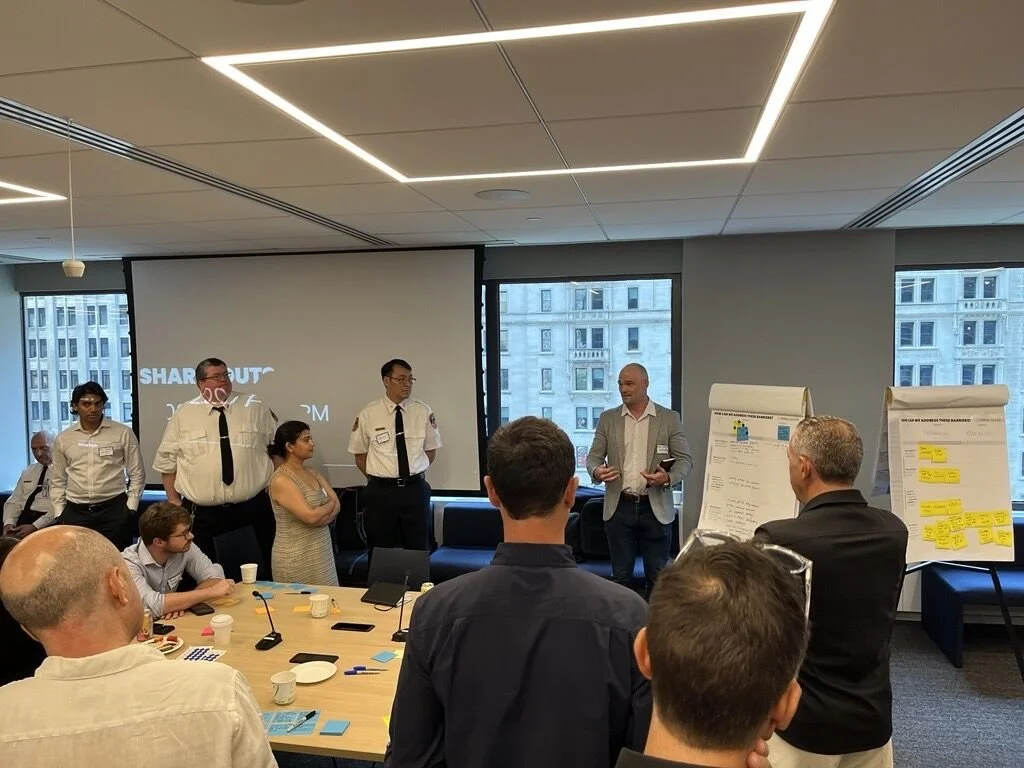
Image courtesy of NYCEDC
While New York City is a world-renowned leader in real estate, architecture, engineering and construction, we lag behind other regions in widely adopting mass timber. The pathway to implementation is still being paved, including the development of a permissible regulatory framework. Although the New York City Building Code was updated in 2022—to allow cross-laminated timber (CLT) construction up to 85 feet for the first time—turning code into built reality requires working through hundreds of details: how designs are drawn, reviewed, permitted, fabricated, inspected, and assembled on a construction site.
The New York City Economic Development Corporation (NYCEDC) recognizes the potential of mass timber to decarbonize the City and advance its climate goals. Just as importantly, EDC recognizes how difficult first-mover work can be and is taking tangible steps to help make mass timber buildable—not just for The Exchange, but across the City.
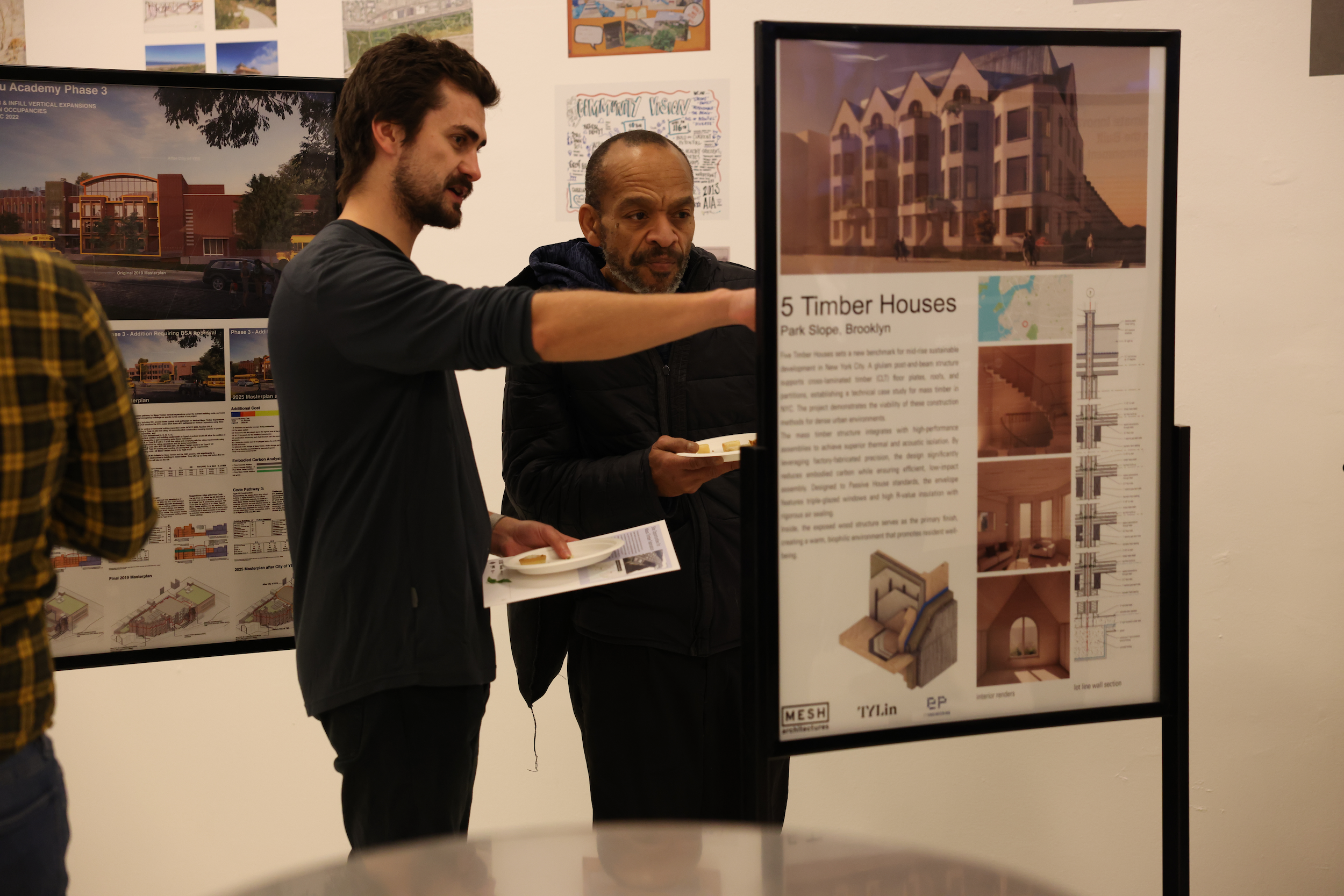
Image courtesy of NYCEDC
Launched in 2023 by NYCEDC, the New York City Mass Timber Studio is a multi-agency effort providing the tools, expertise, and feedback loops needed to advance mass timber projects across the five boroughs. The Studio’s two cohorts have supported 14 projects totaling more than 850,000 square feet of potential mass timber development. Many of these projects are located in environmental justice communities, with project life-cycle assessments reporting average reductions of 30-40% in global warming potential compared to conventional structural systems. Unlocking mass timber’s potential to reduce carbon, shorten construction timelines, and lower project costs requires an ecosystem-driven approach. The industry needs to have a workforce that understands how to design, plan, and construct a mass timber project, and the City needs to have regulators who can confidently assess the project’s structural and fire safety.
The Studio is one example of how to bridge this gap between plan and implementation. At its core, it’s a structured forum that brings project teams and regulators together to overcome barriers to safe mass timber construction in New York City—while training all stakeholders who will engage with a mass timber project across its lifecycle.
In addition to being a technical assistance program, the Studio is also a model for implementing innovation through sustained collaboration. That’s why the Studio brings together the Department of Buildings (DOB), Fire Department of New York (FDNY), designers, builders, and industry experts—such as Woodworks—to discuss the real-world issues that stand between aspiration and implementation:
How mass timber interfaces with stair and egress requirements
What construction-phase fire safety looks like
How to stage and store timber safely—especially on an island where “just-in-time-delivery” isn’t possible
The Exchange was one of seven projects that benefited from participating in the latest Studio cohort. Though questions remain for the ambitious project, the Studio allowed The Exchange team to explore solutions to technical challenges through 1:1 consultations and group-learning sessions. It also helped other agencies like DOB deepen their familiarity with the technical issues associated with scaling mass timber in the U.S.—which must be resolved to decarbonize the built environment and meet the City’s climate goals.
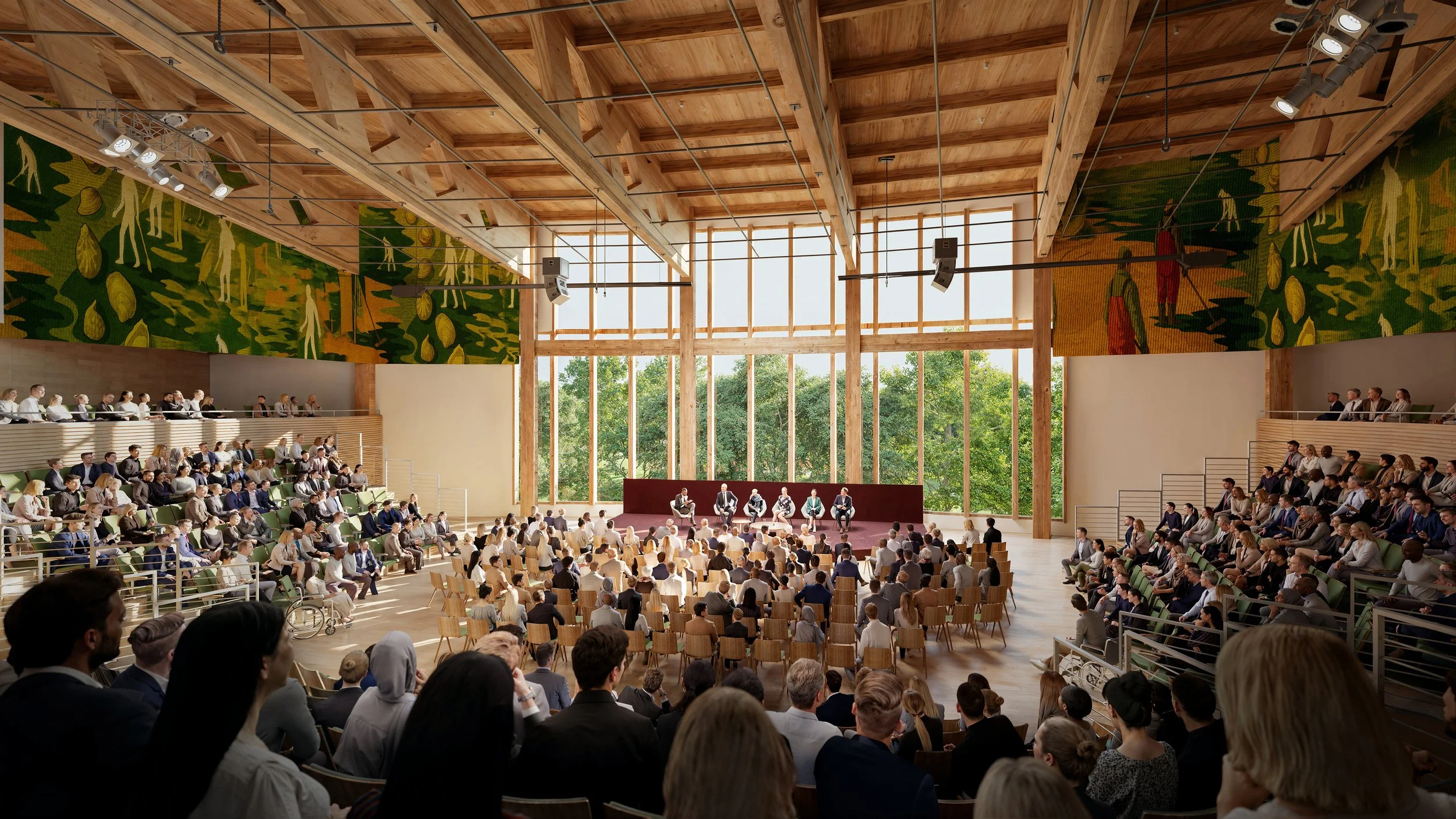
The Exchange’s climate campus coming to Governors Island
As demand for mass timber increases, New York City has an opportunity to coordinate a regional economy that supports a sustainable supply chain and generates workforce development and manufacturing opportunities in upstate New York communities. By aggregating demand and signaling a credible project pipeline, the Studio helps create conditions for regional investment in fabrication capacity, logistics infrastructure, and workforce training.
The novel way the studio convenes cross-sector stakeholders to workshop challenges and unlock scalable pathways for sustainable construction doesn’t have to be limited to building materials. It’s a replicable model for cities to scale climate solutions that are struggling with coordination, structure, and sustained engagement—whether that’s low-carbon concrete, advanced energy storage, or emerging climate technologies.