Transforming an NYC island into a living lab for Climate Tech solutions
As 2025 comes to a close and the New York Climate Exchange reflects on the founders, researchers, communities, and institutions who helped push climate solutions forward this year, we recognize that innovation and collaboration together lead to lasting solutions.
Because climate impacts touch every aspect of society, there’s now more opportunity than ever for climate tech to play a transformative role across nearly every sector, from the food we eat, to the cars we drive, to how we build our homes. As the pace of technological advancement continues to accelerate, the opportunities for real world application are promising. Now is the time to ensure that these technologies are harnessed to respond to the greatest challenges we face.
Regularly recognized as the #2 technology hub globally, NYC has cemented its reputation for innovation across established sectors including finance, media, and healthcare. Now we are in the midst of putting NYC on the map as a one-of-a-kind hub of climate resilience, committed to applying our tech capacity to ensuring a more sustainable future for all.
The Exchange serves as a bridge between research, innovation, and implementation, creating pathways for communities to transform how cities mitigate and adapt to climate impacts. Climate tech is a critical piece of that puzzle.
What’s the role of climate tech in a resilient urban future?
Climate tech refers to innovative solutions that leverage advanced technologies to reduce environmental harm, minimize the impacts of climate change on individuals and their communities, and prepare us for the climate realities that are already underway, like extreme weather. Just as climate cuts across so many sectors, climate tech encompasses a broad range of technologies and approaches that are helping to make resilient, low-carbon cities a reality.
Here’s a closer look at climate tech innovation across some economic sectors that are key to decarbonizing the planet and safeguarding us against the worst impacts of climate change:
Transportation Technology & Infrastructure: This sector accounts for ~14% of global emissions. Innovations focus on electric vehicle development, charging networks, batteries, AI-powered route optimization, micromobility, and low-carbon transit.
Energy, Battery & Grid Technology: Currently responsible for ~25% of emissions, this sector includes the generation, storage, transmission and management of energy such as solar, wind, nuclear, hydrogen, and long-duration energy storage, new battery chemistries, as well as grid automation and orchestration.
Food & Agriculture Technology: This sector contributes to ~24% of global emissions, with opportunities for growth in areas like vertical farming, regenerative and precision agriculture, sustainable fertilizers, crop analytics, and alternative proteins.
Built Environment: Buildings generate ~6% of emissions globally and in New York City buildings are responsible for over two thirds of greenhouse gas emissions. Sustainable solutions demonstrating promise in decarbonizing the built environment include bio-based materials, deep retrofits, efficient HVAC and clean heating, green cement, and smart building systems.
Industrial & Manufacturing Technology: At 21% contribution to global emissions, heavy industry is notoriously challenging to decarbonize. However, doing so will create an outsize positive global impact. Innovation opportunities include solutions like green steel, circular supply chains and manufacturing, electrification and waste heat recovery, sustainable packaging, and improved materials recovery.
Climate Data & Finance: Data and finance are major enablers of climate action, creating access to the information and capital needed to drive impact at scale. Key opportunity areas include earth observation, climate-risk modeling, sustainability reporting, insurance innovation, and green finance.
Carbon capture, utilization, and storage (CCUS): Recognition that emissions reductions alone are not enough to halt or reverse the worst impacts of climate change has accelerated interest in carbon capture, removal, utilization, and long-term storage technologies.
Where does The Exchange come in?
As a cross-sector network that includes universities, corporations, community-based organizations, we are collectively working toward a future where:
Barriers for climate technologies are lowered, accelerating the pace at which innovators deploy critical climate technologies. This includes connecting promising technologies with the right capital at the right time.
New York City’s climate tech ecosystem is diverse, collaborative, and multi-sector, ensuring solutions are purpose-fit, relevant, and equitable so they can have a measurable impact on the climate crisis.
Collaboration between startups, communities, policymakers, and investors is commonplace, recognizing that technology cannot advance in a vacuum.
How does climate tech advance solutions across urban resilience, climate data, and finance?
The Exchange is actively matching needs across climate data, urban resilience, and climate finance with scalable climate tech solutions that address the climate crisis. The Exchange serves as a bridge between research, innovation, and implementation, creating pathways for technologies that can transform how cities mitigate and adapt to climate impacts.
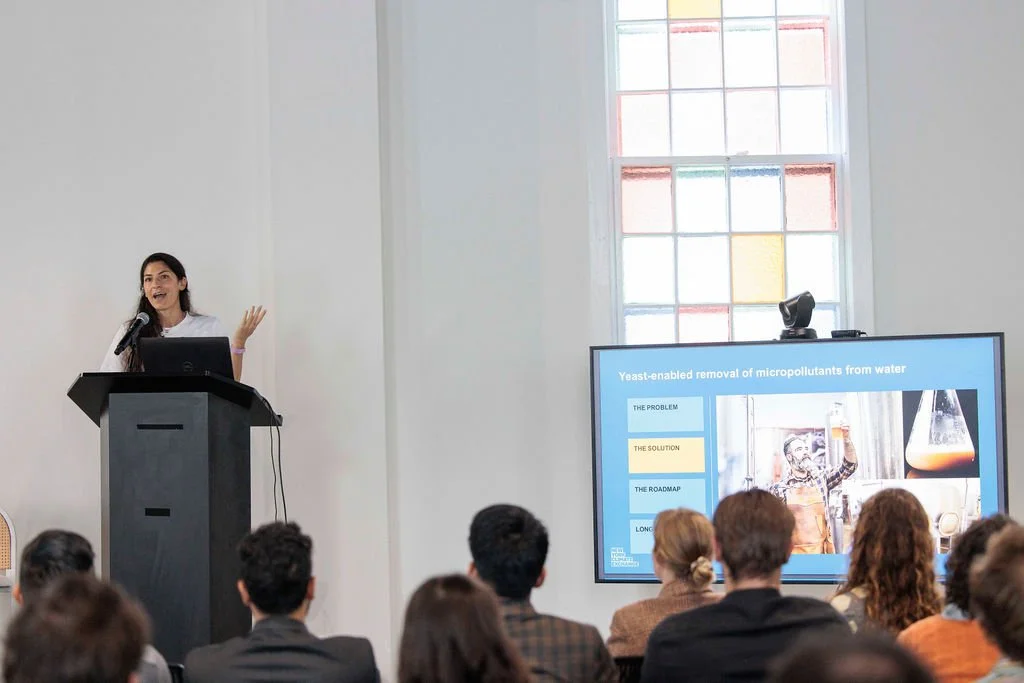
Climate Data: Climate tech is advancing the way data is collected and analyzed at scale, helping to turn what we know into actionable tools that can guide progress. Sensors, satellite imagery and analytics platforms improve how environmental data is measured, monitored, and interpreted, enabling clearer insight into risks, trends, and opportunities for quantifying adaptation and resilience. An example of this work in action includes Xiao Liu, part of The Exchange’s first cohort of climate tech fellows, who is leveraging data and AI to develop tools for real-time wildfire management.
Climate Finance: There is a growing recognition that the climate tech capital stack will be diverse, reflecting that solutions need access to different types of funding from equity to debt depending on their stage and sector. Our Climate Tech Fellowship acknowledges the complexities of this funding ecosystem and helps fellows navigate it according to their needs. Additionally, there is a growing opportunity to innovate the mechanisms for climate finance leveraging advanced technology and AI. For example, continuing to evolve insurance instruments to ensure that cities can best respond to increased risk and severity from extreme weather and protect people and critical infrastructure.
Urban Resilience: We can advance urban resilience by creating the right conditions for testing new technologies and policies in real-world contexts. From bio-based materials, flood-monitoring systems, and nature-based interventions, there are myriad climate tech solutions that can help cities prepare for, respond to, and adapt to climate impacts. Shannon Parker, an Executive-in-Residence at Duke University and a member of The Exchange’s first climate tech cohort, is pioneering low-carbon bio-cement for shoreline restoration and infrastructure. Their approach, in part informed by collaboration with Exchange partner Billion Oyster Project, uses plant enzymes to mimic shell formation resulting in a new climate resilient material.
Climate tech powers the batteries in electric buses, the satellite systems that track flooding, the materials being developed for carbon-negative buildings, and the financial tools that help climate innovations scale. When viewed through the overlapping lens of climate data, urban resilience, and climate finance, we can see how climate tech provides a roadmap to drive meaningful climate action.
As we work together to build an ecosystem where these technologies can grow and thrive, climate tech will shape a resilient, equitable, and low-carbon future.
How the Exchange is helping NYC and other cities move from conversation to implementation
Imagine, it’s 2029 and you take a hybrid electric ferry from Manhattan to visit The Exchange’s new, fully operational climate campus on Governors Island. The campus serves as a living laboratory where climate technologies are tested, refined, and deployed in real urban conditions. The solutions across the campus trace their roots to innovators supported through some of The Exchange’s earliest programs: The Climate Tech Fellowship and the Sustainable Solutions challenge.
Taken together, the Fellowship and Sustainable Solutions Challenge form a complete pipeline—from research and venture creation to piloting and implementation. The technologies emerging from these programs demonstrate how The Exchange accelerates climate solutions from idea to impact.
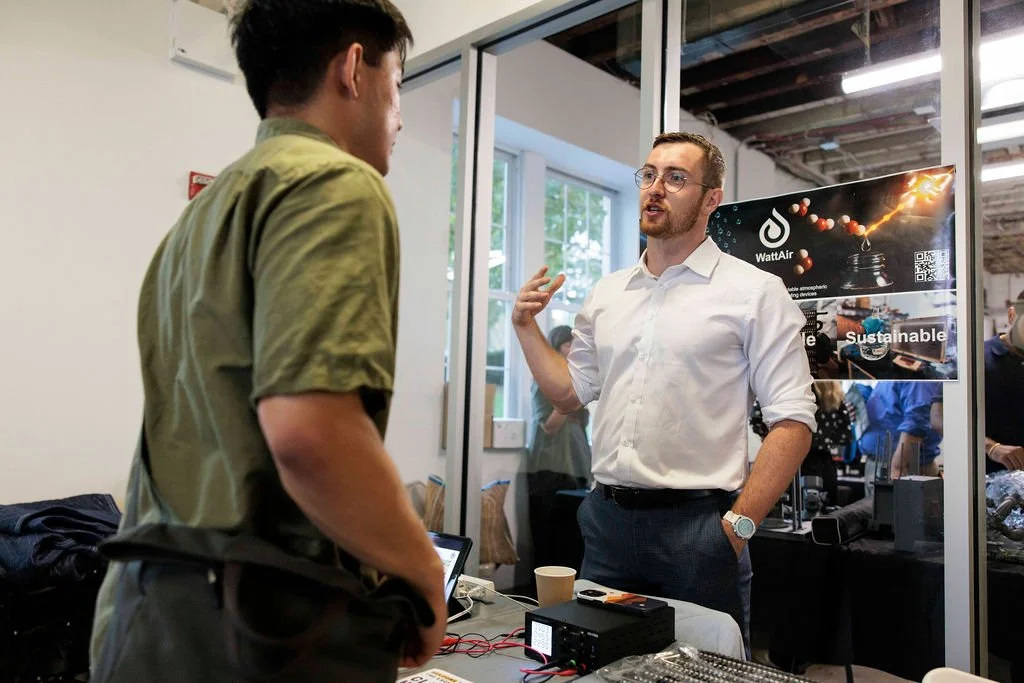
The Climate Tech Fellowship is The Exchange’s first signature incubation program, launched in 2025 and built in collaboration with innovation leads, tech transfer offices, and research labs across the 11 university partners of the Exchange’s partner network. Our inaugural cohort brings together professors, PhD researchers, students, visiting scholars and executives-in-residence, representing a diversity of perspectives and experiences. Fellows participate in a tailored climate tech venture curriculum taught by industry experts, are matched with mentors for one-to-one support, and receive non-dilutive funding, piloting support, as well as entry to the world-class climate tech ecosystem in New York. Collectively, they are developing innovations for grid resilience, hydrogen storage, coral restoration, and real-time wildfire and flood management.
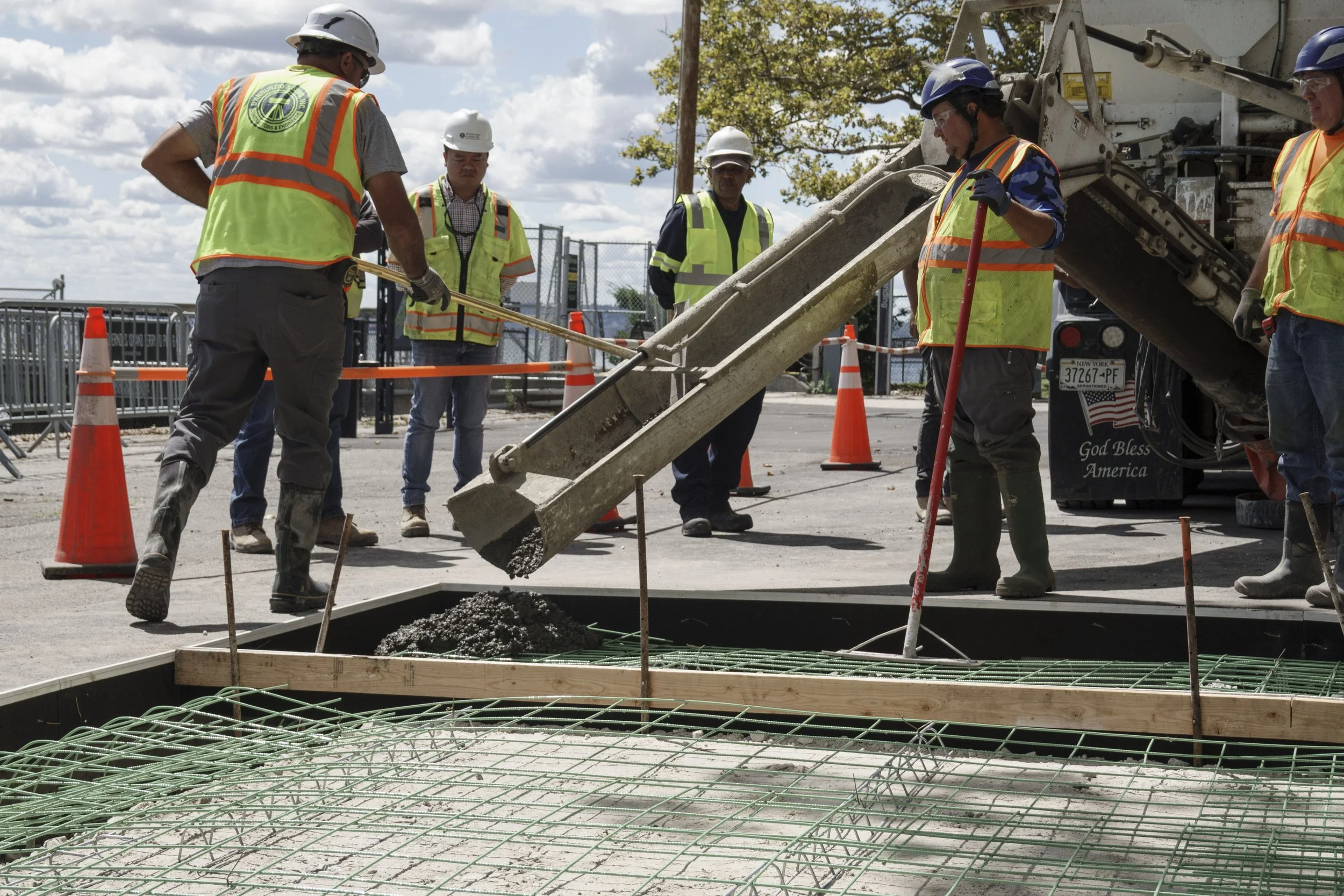
Also launched in 2025, The Exchange’s Sustainable Solutions Challenge called for groundbreaking, implementation-ready innovations that can be integrated into our new climate campus on Governors Island, delivering on our vision to make Governors Island a living laboratory for resilient, low-carbon urban design. Some of these solutions are already being implemented on Governors Island. One of the finalists in the Sustainable Solutions Challenge, Prometheus Materials, is partnering with The Exchange, Skanska, and the Trust for Governors Island, to test the use of algae-based concrete. Because traditional concrete is among the most carbon-intensive building materials, Prometheus’s ProZERO™ technology has the potential to materially reduce emissions in New York City and other urban areas. If successful, this pilot could inform broader adoption – and integration into The Exchange’s climate campus - and advance cleaner construction practices.
When the campus opens several years from now, the innovations supported by these first programs will be among many that demonstrate how climate tech can help to secure a world where everyone is equipped to thrive.