Turning Climate Data into Action: Key Takeaways from the 2026 Climate Solutions Summit
On April 17, policymakers, data practitioners, community leaders, and other partners joined The New York Climate Exchange for its second annual Climate Solutions Summit NYC. This year’s summit focused on the urgent need to close the gap between climate data and real-world action.
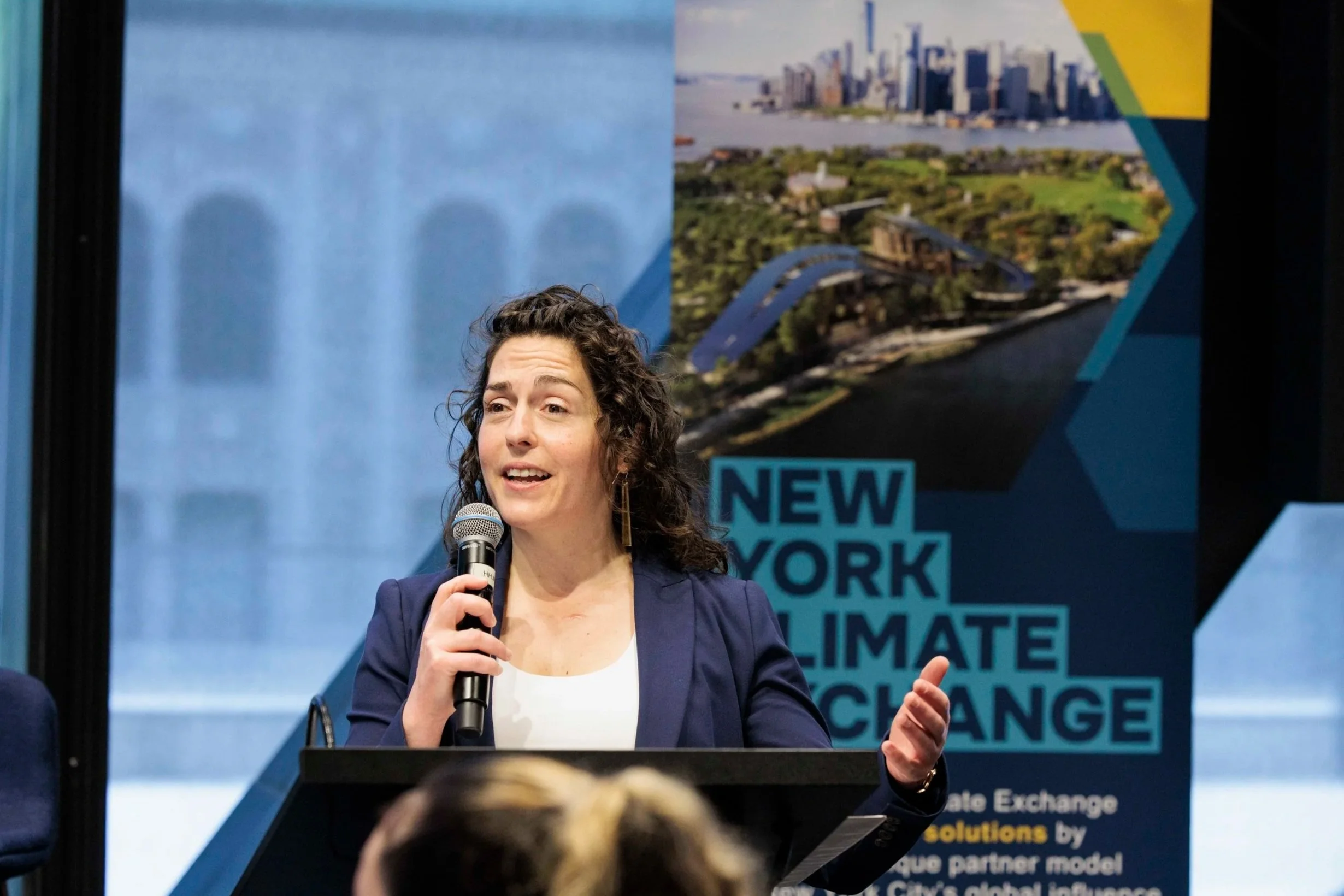
The day opened with remarks from Campbell Watson, from IBM Research, and a keynote from Amanda Lefton, from the New York State Department of Environmental Conservation.
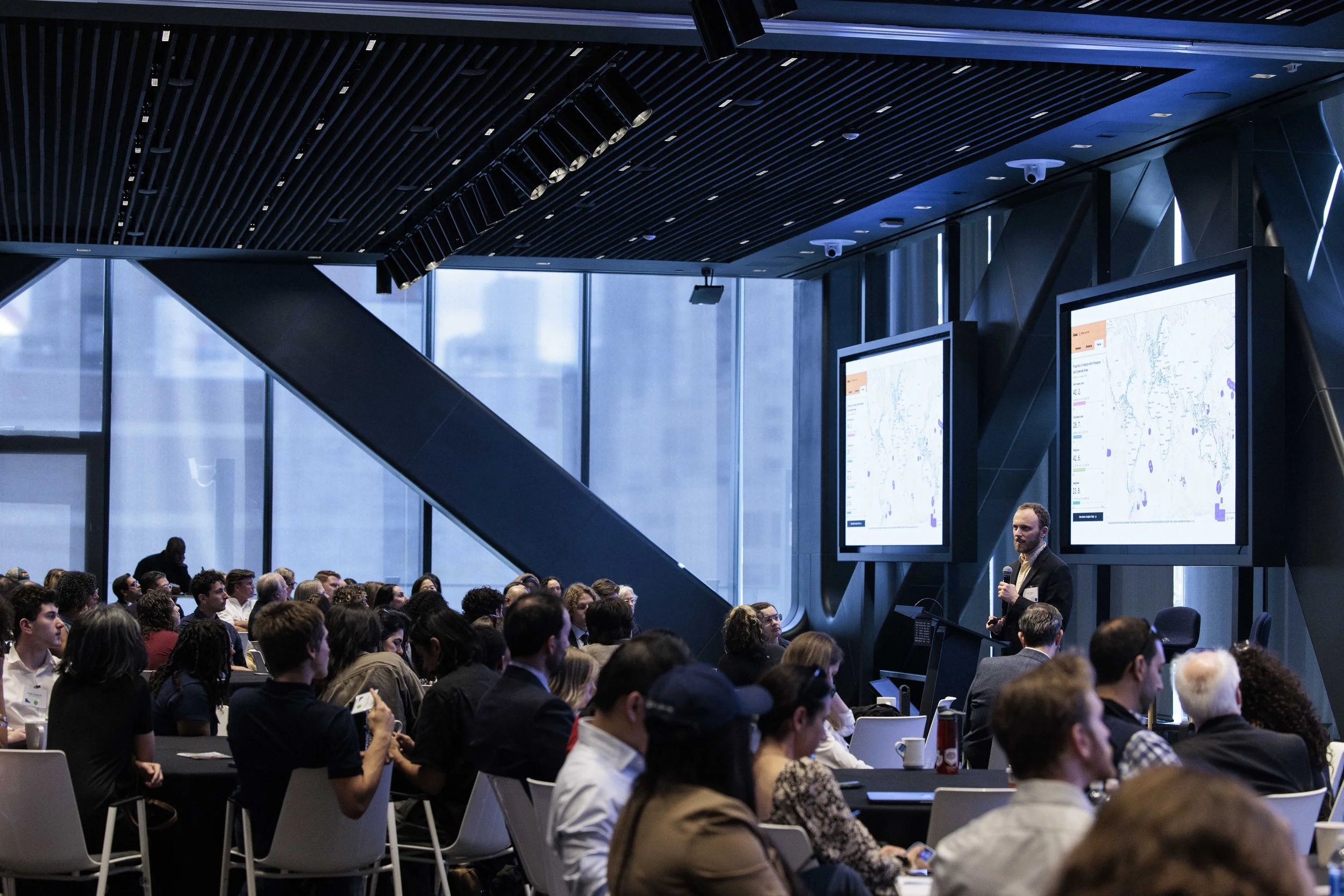
A practitioner showcase followed, demonstrating how climate data is already powering actions in NYC and beyond. Organizations SkyTruth, the Mayor’s Office of Climate & Environmental Justice (MOCEJ), Rebuild By Design, and IBM’s Impact Accelerator took the stage for lightning data demos.
Paul Shepson, dean of Stony Brook’s School of Marine and Atmospheric Sciences, introduced a fireside chat between Kevin Reed, Lead Climate Scientist at The Exchange and New York University professor Yuliya Parshina-Kottas. The two explored open data sharing ecosystems and the importance of public data translation.
Shepson’s comments illustrated how The Exchange and its partner network can work to narrow the distance between data collection and policy application. One example of this is the newly launched Governors Island Environmental Observatory, which provides local, real-time air quality information and has the potential to engage hundreds of students and thousands of visitors in community science.
Throughout the day, one question kept surfacing: how can climate data help New Yorkers make informed decisions and take meaningful action?
In the afternoon, attendees tackled this question in a hands-on workshop focused on improving data access, communication, and impact.
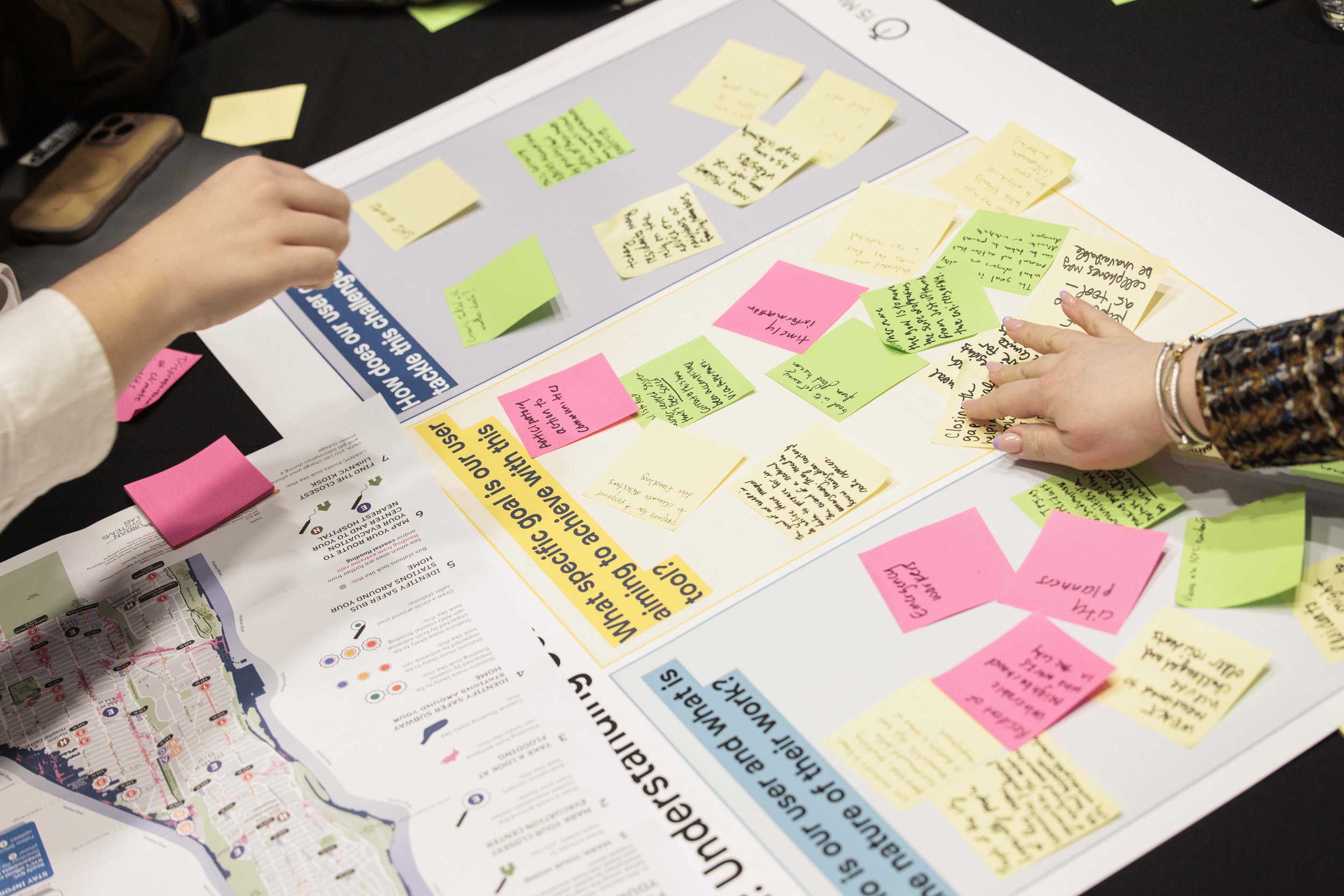
The session brought together participants from different sectors to design data tools and approaches grounded in real community needs. Working in teams, participants developed concepts tied to specific use cases as presented by “NYC Field Guides”. These real-world challenges required better access to data to improve resilience, preparedness, and environmental outcomes.
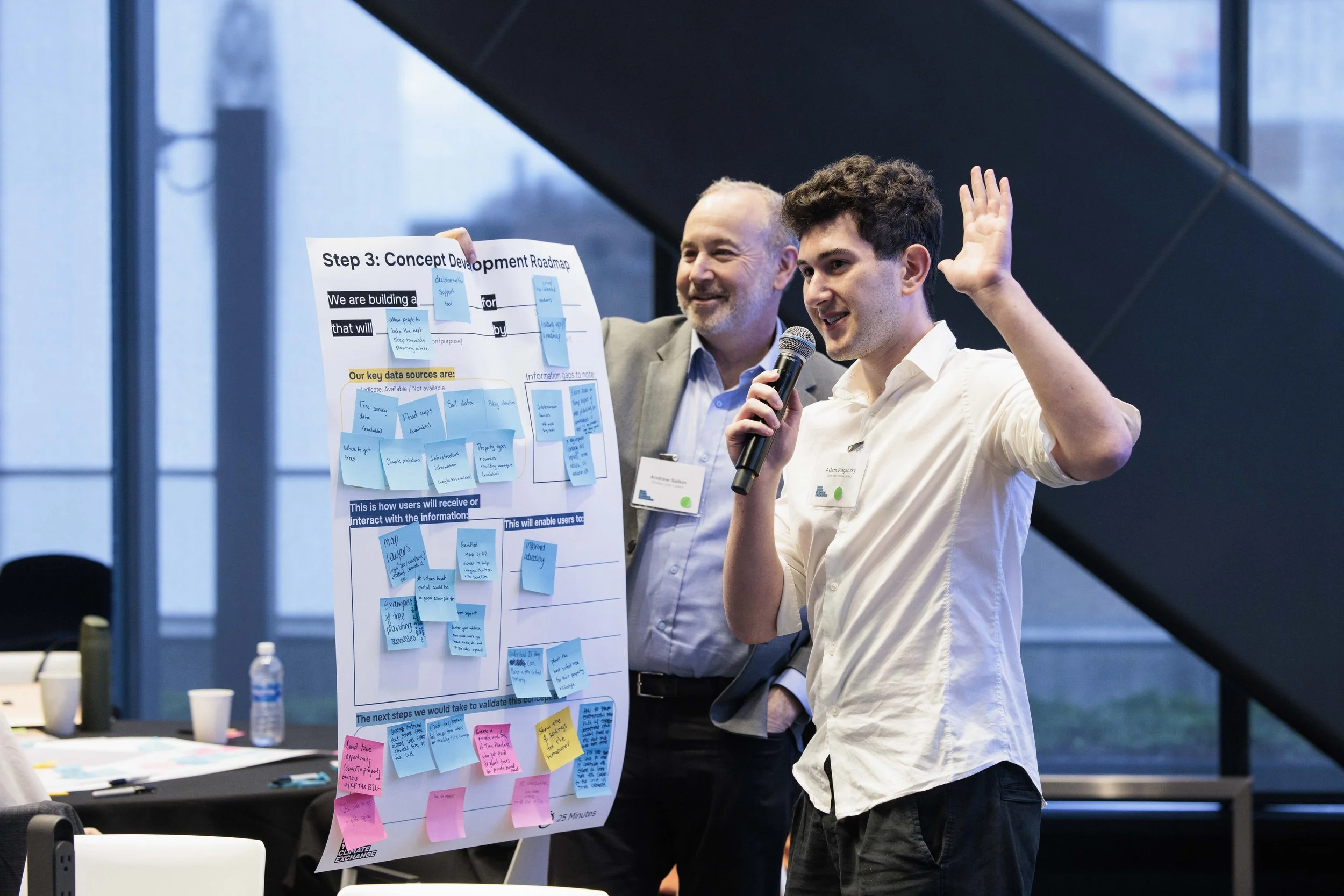
By the end of the 90-minute workshop, each group presented a prototype idea for a data-driven tool or solution that could support measurable climate action. Just as importantly, the session surfaced broader lessons about what effective, inclusive climate data systems should look like.
Designing Solutions Around Real Challenges
The workshop used a user-first design approach. Instead of starting with technology, participants started with people: what decisions they face, what information is missing, and how better data could change outcomes.
Stefania Curto for The New York Climate Exchange
NYC Field Guides represented a range of real users and scenarios:
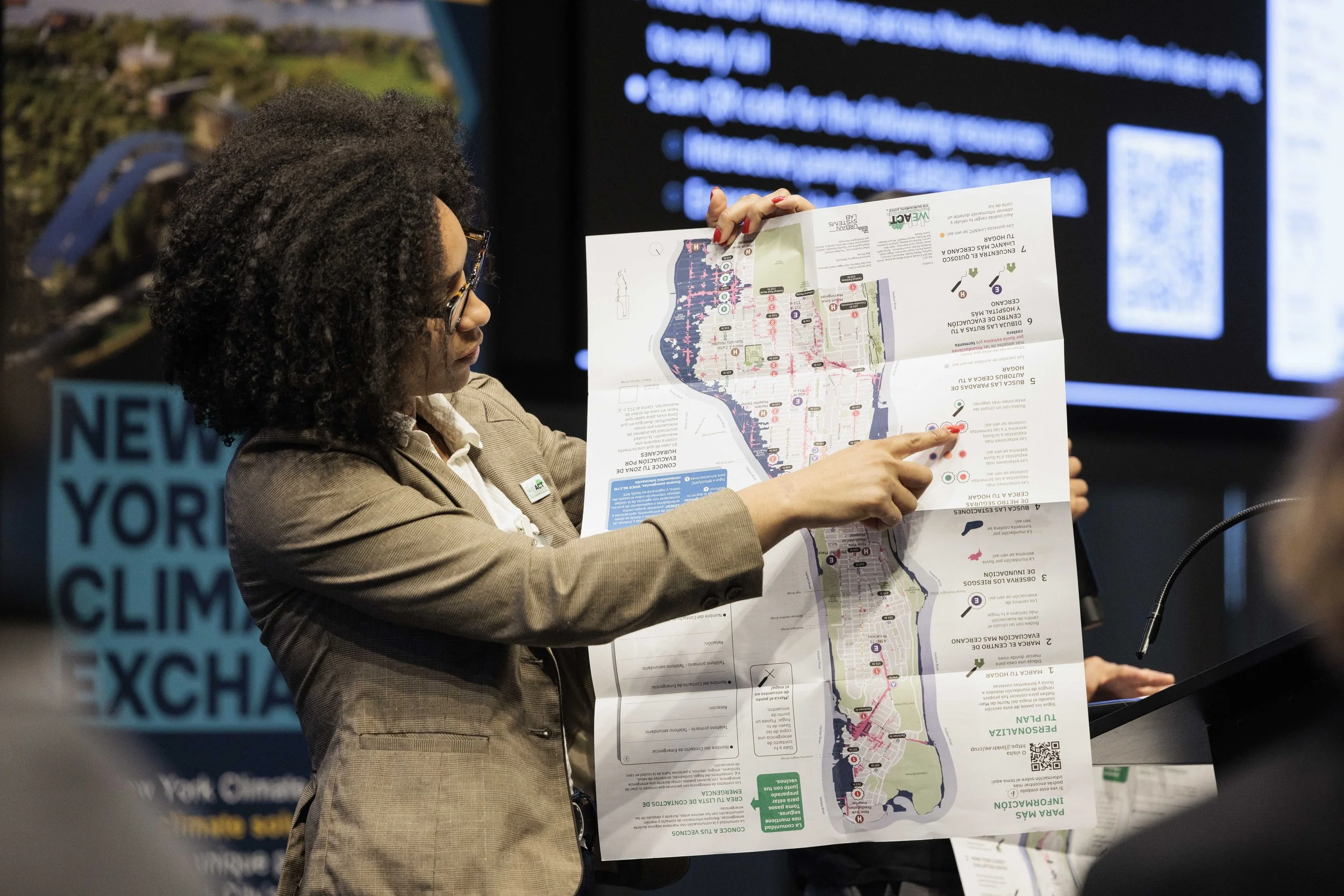
WE ACT for Environmental Justice explored expanding their Climate Ready Uptown Plan resources to environmental justice communities across New York City.
Studio WXY examined ways to improve tree canopy coverage by helping private property owners and managers plant and steward trees to support the NYC Urban Forest Plan’s goal of reaching 30% tree canopy coverage.
Green Guerillas focused on using data to position community gardens as critical climate infrastructure.
NYC Department of Environmental Protection, Bureau of Coastal Resilience, considered hyper-local flood resilience tools for forecasting, hindcasting and real-time deployment of resources.
Stefania Curto for The New York Climate Exchange
Connecting to Users
A clear theme emerged: the best tools aren’t the most complex—they’re the most usable. They must meet New Yorkers where they are, with clear, actionable information. With so many existing tools, the opportunity is often not to build new ones, but to make current ones more accessible and useful.
Participants emphasized that tools should deliver clear, streamlined information that supports action. With so many apps and digital platforms in existence, it’s more efficient and economical to make those tools more inviting and actionable.
In the case of Studio WXY, one solution combined address-level data (soil, flood risk, environmental suitability) to guide property owners on where and how to plant trees.
For WE ACT, participants proposed a customizable readiness map tailored to household needs.
Another clear takeaway was the importance of improving information sharing. Participants noted that many apps and dashboards are fragmented or require a high level of technical know-how to engage.
In the Green Guerillas case, one idea envisioned a shared platform for gardeners to exchange data, practices, and impact, which could strengthen collaboration and visibility.
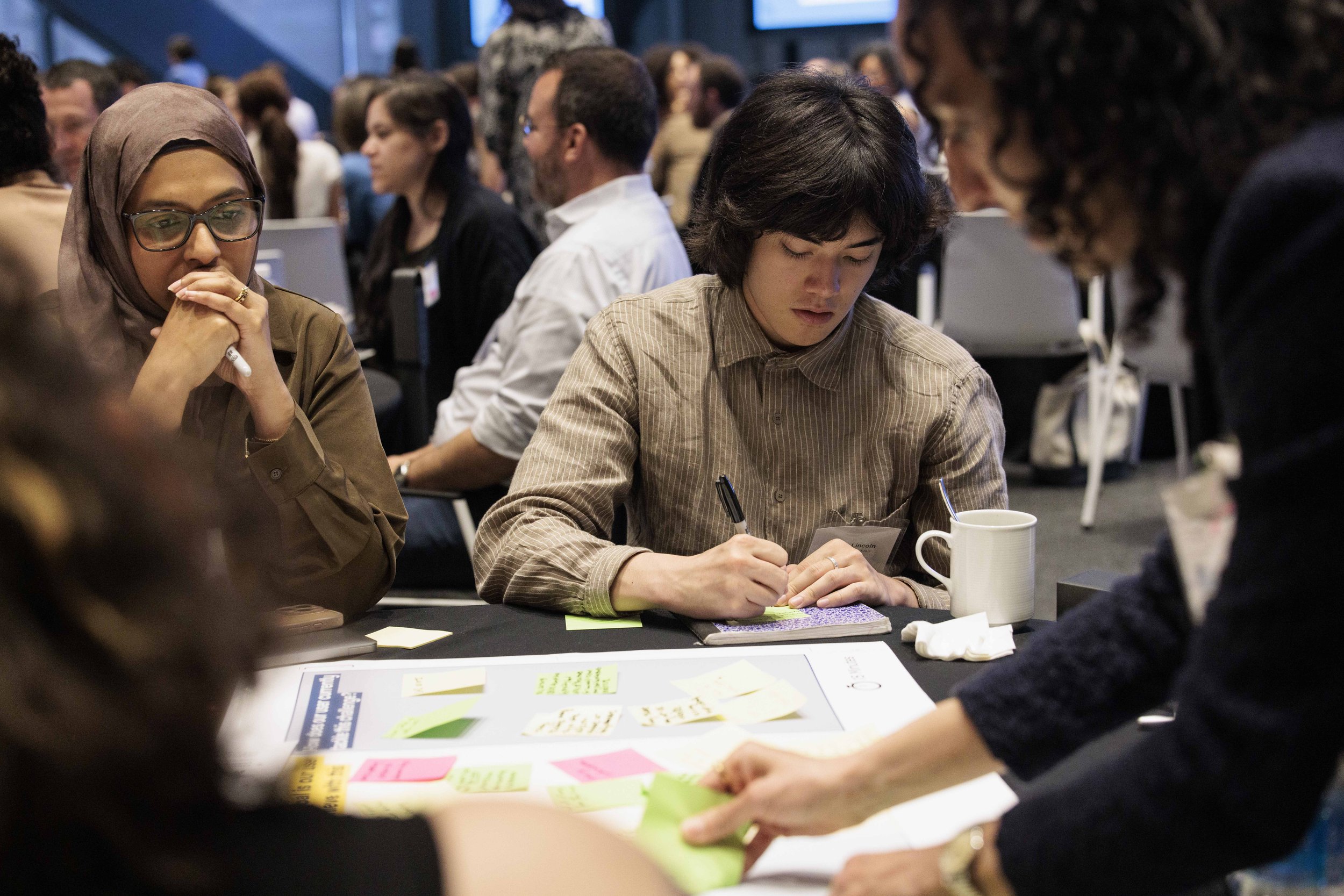
Participants also stressed communication design. Data only matters if people can understand and use it both in their language and format.
Building Trust, Community Value, and Long-Term Impact
The workshop surfaced a critical balancing act: climate data systems must be open and useful while still protecting privacy and building community trust.
For the NYC Department of Environmental Protection, participants explored centralized flood-risk platforms for agencies, while acknowledging surveillance and data use concerns.
Similarly, in the WE ACT for Environmental Justice discussion, participants stressed that communities must control how their data is used. Effective resilience tools should empower communities, not reinforce top-down decision-making.
Finally, many groups focused on showing the broader social benefits of climate action. Data can be a powerful motivator when it helps people see how individual choices contribute to neighborhood well-being.
In the Studio WXY scenario, participants discussed how tools could show residents how planting a tree improves shade, air quality, and neighborhood livability while contributing to the City’s larger urban forest goals. Some suggested augmented reality features that could visualize future canopy growth.
Likewise, Green Guerillas inspired ideas for neighborhood-scale monitoring that demonstrate how gardens reduce heat and improve local microclimates—making visible benefits that are often felt but rarely measured in these critical community spaces.
Stefania Curto for The New York Climate Exchange
Looking Ahead
The workshop made one point clear: climate data is most powerful when it helps people make decisions in their daily lives.
Whether supporting emergency preparedness, expanding tree canopy, strengthening community gardens, or improving flood response, the strongest ideas centered community trust and practical user experience to deliver measurable impact. As cities continue investing in climate technology, these lessons offer a strong roadmap: start with users, simplify access, build collaboration, and ensure residents benefit from the value created.