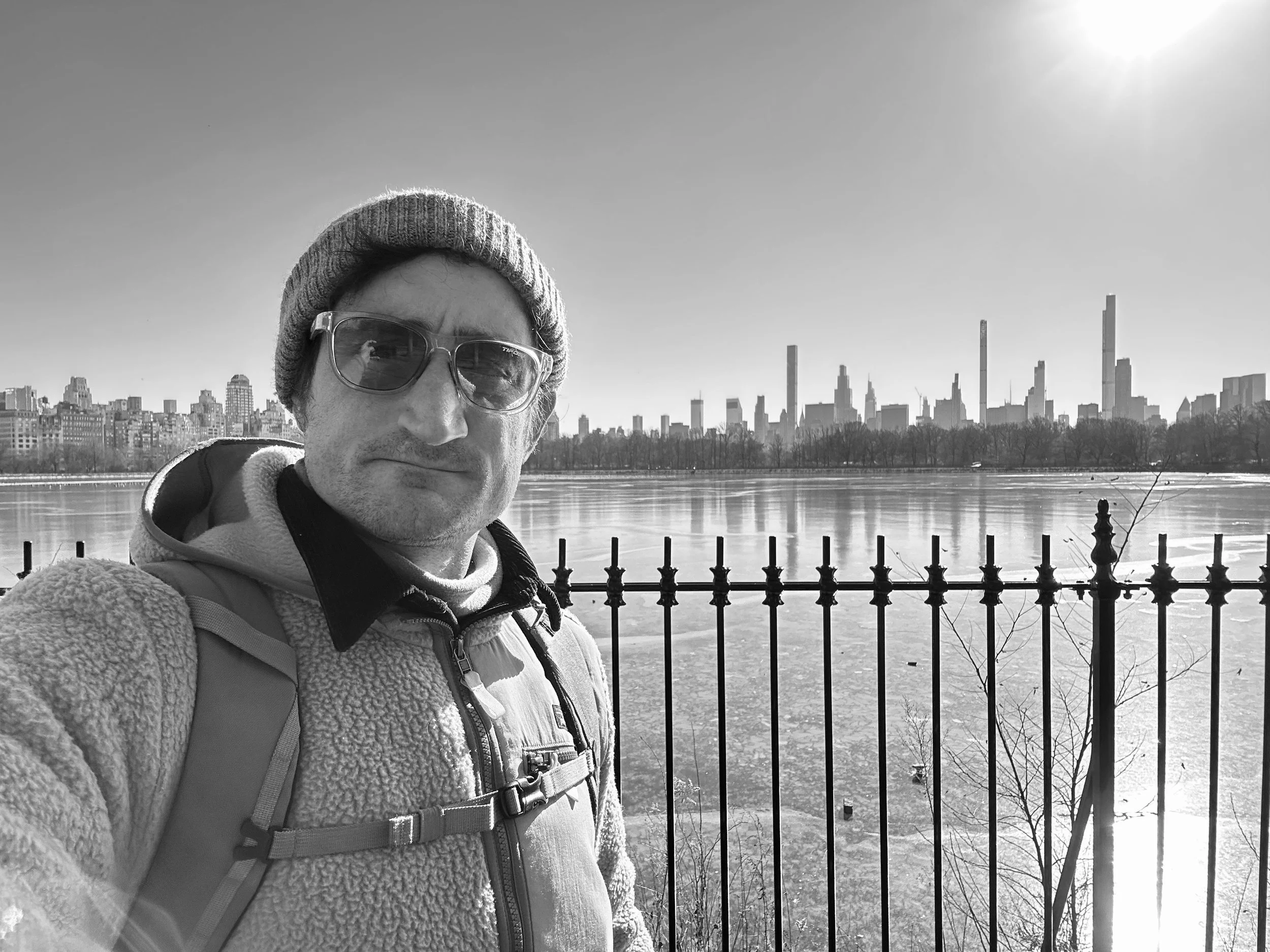
Robert Markuske
Sustainability Coordinator and Marine Affairs Instructor and FFA Advisor
NY Harbor School
He/Him
I began my teaching career in 2012, specializing in social studies. I have an undergraduate degree in Political Science and a master's degree in Adolescent Education, with a concentration in Social Studies education. In addition, I hold a Career Technical Cert in Natural Resource Management based on my industry experience. Before teaching, I spent several seasons as a National Park Service ranger at three different parks, where I gained valuable experience in nature-based and conservation education. I left the NPS to teach for two years at New York Harbor School. After spending two years at Harbor School, I relocated to New Orleans to pursue my career in education. Eventually, I returned to Harbor School, where I helped create a cross-disciplinary program called Marine Affairs; with support from academic institutions and industry partners, I developed a hands-on curriculum focused on environmental science and sustainability. In this program, students explore emerging issues related to natural resources and work on solutions through advocacy. What I teach now wasn’t where I started, and I am always looking to grow professionally. I currently live in Brooklyn with my partner, Clara, and our cat, Samson, where I enjoy live music, creating composting systems, reducing waste through organic collection, gardening, and bicycling around the city. The people around me have deeply inspired me, and I am always eager to learn from others.
Full Transcript
INTRO
This is The Climate Story Project— where we share real stories about how climate change is shaping our lives. Stories that connect us. Stories that move us to act. This is a project of the New York Climate Exchange, a non-profit organization that’s accelerating climate solutions through a unique partnership model and climate campus on Governors Island. In each episode, you’ll hear voices from different places and walks of life in our growing archive of personal climate stories, so that we can remember, reflect, and respond together.
The story you’re about to hear is from Robert Markuske. Robert is the Sustainability Coordinator, Marine Affairs Instructor, and FFA Advisor at the New York Harbor School, a partner of the New York Climate Exchange.
ROB
I like to admit sometimes that I was like a late blooming environmentalist. I did not want to be a sustainability instructor. I didn't want to teach a multidisciplinary course around economics, human impact on the environment and environmental policy. I wanted to be a lawyer. It's kind of controversial within the world of environmental education because I went to school for political science. I've had to learn these things. Right? I learned how to grow seaweed with my students, I learned how to do beekeeping, I've learned how to make compost, all over the last seven years alongside my students.
You know, I grew up on Long Island. I always sort of engaged with the coastal environment and went camping with my grandfather and I worked on the shores building houses with him. He would build houses in Montauk and in the Hamptons. I think I grew up, you know, consciously, it took money to enjoy the environment. You know, Long Island was built on segregation. I mean, it's not a secret. Like Levittown, the most famous town, was like restricting, Black GIs from living there. And the tracks, right? South of the track, north of the track. Right? So, you know, I grew up in a middle class household. But there was sort of atmosphere of like, in order to live on the water, like you needed a lot of money. And people had boats and people had beach houses and I was thinking you need money to access this beauty. The environment and natural resources were to be taken. Very materialistic, and very consumption based, and very sort of use and take. I don't think I remember anybody ever telling me to, like, not litter at the beach. I don't know, I don't remember anybody educating me about the environment as a kid.
The idea of Harbor School was to take these students to teach them about the waterfront, to teach them how they could be stewards of the waterfront, but also use it as a job. We use the waterfront for a variety of purposes, right? Spiritual, economic, for our health. The idea was to get these students engaged in all those things.
Being a lifelong learner is something that I think is really important to the work. You know, climate work, and environmental justice, and health, and economic equity. Like, I am not that unique. I'm like a middle aged, straight, white guy. Like I strive for mediocrity. All these things that I have done, that I am doing, that I have learned, people have been doing 'em forever. Indigenous people. Like, you know, like I've learned composting from a woman at Earth Matter that's been doing it since the nineties. I've learned how to do advocacy from city council members that have been doing it since their youth. People have been doing this stuff for a long time, and like the way to learn is to engage with those people that have been doing it.
I feel like I'm a peer of my student, like we're peers in this quest to, I don't know, solve these issues that are plaguing our communities. Just because my students are 15, 16, 17 doesn't mean they don't know something. And it also means they may know more than me about something. Like their voice particularly matters. Particularly when we're trying to solve problems that affect their community maybe more than mine.
When it comes to climate change and environmental equity and sustainability, all these things, like, solutions are there. Right? They exist. People want to impose solutions from the top and they want to make a broad sweep decision. Right? And it's usually like a technocratic approach to a community problem. So like all of these things– lack of economic equity, food insecurity, climate change. The list goes on, right? The problems that face a population growing over 8 billion is vast.
When it comes to climate change, it's like, environmental gentrification. Right? You have these people within power making decisions. I mean, has anybody asked the community? People that are experiencing these problems, people that are gonna be affected directly by the solutions, should be consulted. With that said, over the past seven years, I've seen young people of a variety of economic, and racial, and ethnic, and religious backgrounds, stand up at city hall and affect policy.
I wanted to go to school to be a lawyer to affect change in some way. Right? And now, I teach a class that affects change. Like my students change landscapes and change our community to be more sustainable. I've worked with over a hundred students to help change some policies and we go to city hall to speak about citywide composting, or schoolwide composting, advocate for like a marine debris office, advocate for New York City fairs to be equitable for students across the city. So, yeah, although like in a weird, like curvy route, I kind of got to where I wanted to be.
OUTRO
This story is part of The Climate Story Project. To find more stories and learn more about The New York Climate Exchange, visit nyclimateexchange.org and follow us on LinkedIn and Instagram. This episode was produced by Kylie Miller. Thanks for listening.