Youth Climate Journalist & Editorial Intern
Solar One
She/They
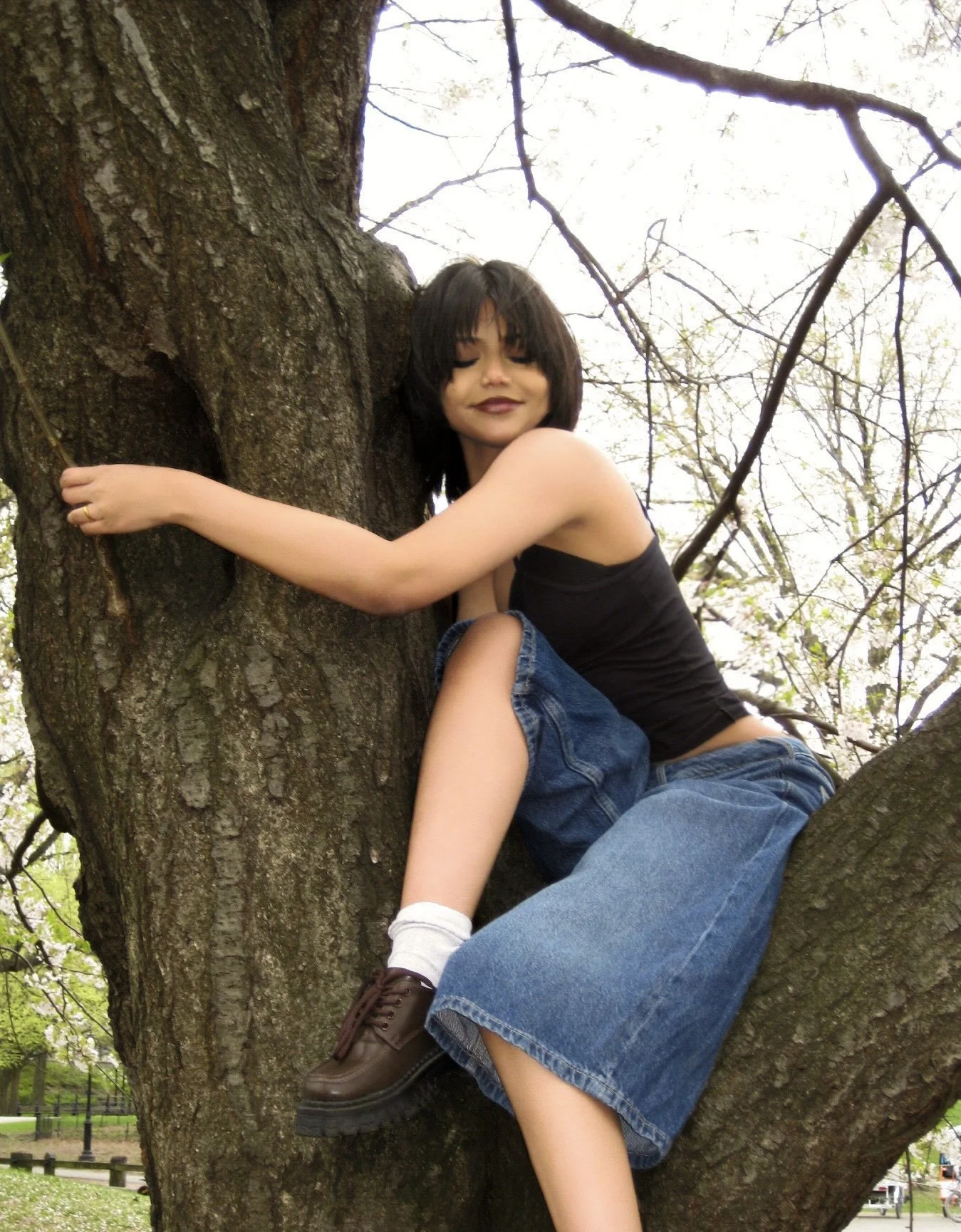
Mahiat Noor, known as May among friends and colleagues, is an avid angler, a bookworm, and a gardener with the opposite of a green thumb. They are a rising freshman at SUNY College of Environmental Science and Forestry. May’s parents immigrated from a small village in Sylhet, Bangladesh, in search of chances stolen from their homeland’s soil. There, reaching the nearest produce store meant crossing a fragile bamboo bridge. At six years old, she arrived in the US, where a bodega is just a five-minute walk from her home in Queens, New York.
May envisions a future where survival does not demand the sacrifice of conscience — where dignity is non-negotiable and care is practiced collectively, not conditionally. Committed to defending both the land and its people, they hope to work as an environmental lawyer in the nonprofit sector while pursuing PhD research in conservation, because real change requires confronting the systems that determine who bears the burden and who thrives off their sacrifice.
Currently, they are a Writer & Editorial Intern at The Warming Times, a climate journal created by Solar One’s Youth Advisory Council (YAC), of which they were also a proud member. Engaged in social, political, and climate activism since age 14, with a focus on their intersections, May has two years of experience coordinating grassroots mobilizations, served as DOE sustainability co-coordinator at her high school, led the establishment of its first greenhouse, and held a leadership role in communications and outreach for a progressive candidate in the 2025 NYC mayoral race.
She dreams of a future where we stop destroying our two greatest sources of wealth: the earth and its people. The pollution choking our planet is more than damage — it’s a war waged against nature, communities, humanity itself, and the futures yet unborn.
Mahiat Noor (May)
Full Transcript
INTRO
This is The Climate Story Project—where we share real stories about how climate change is shaping our lives. Stories that connect us. Stories that move us to act. This is a project of the New York Climate Exchange, a non-profit organization dedicated to accelerating climate solutions from Governors Island, in the heart of New York City. Each episode, you’ll hear voices from different places and walks of life in our growing archive of personal climate stories so we can remember, reflect, and respond together.
The story you’re about to hear is from Mahait (May) Noor. May is a Youth Climate Journalist and Editorial Intern at Solar One, a partner of the New York Climate Exchange.
MAY
My upbringing has shaped the way I view climate change 'cause responsibility is like taught in my culture and I feel very responsible for the world and the people around me. I am an immigrant from Bangladesh and I'm the oldest daughter in my South Asian family.
I'm from the village. Uh, the nearest store was like a bamboo bridge away. Um, and I remember this one incident. It was my, I think my sixth birthday. I was like desperate for sweets and a flooding has just happened. And floodings are very regular in Bangladesh. My village gets flooded completely. Uh, our houses were made of like mud and a steel roof. So we would have to like rebuild certain parts of it if it was like extreme.
And this one time I just, I was really spoiled. my dad spoiled me to the core, and I begged and I begged, i'm like, I need sweets. I want sweets. It's my birthday. You don't love me. And he was like, fine, fine. He took me, he walked, he picked me up. He trudged through the water. And our village, again, you have to cross like a forest to get to the market area. And the water was up to his knees. and there was like electrical wires in the water that was submerged. But the market was still buzzing. There were people selling things. Uh, and particularly there were, there were like children, children vendors there.
And I remember this one boy, uh, I was lucky enough and privileged enough to have a boat, and my dad took me on the boat to like dredge through the lake to get to the market. And this boy was sitting on top of like a staircase to this old building that was broken down. And he was like selling sweets. And my dad, uh, made eye contact with him and he took that as a signal that like, I wanted something 'cause I was eyeing his sweets 'cause I wanted sweets. And uh, he trudged to the water and like frantically started running. And he, like the current kind of pulled him under. And mind you, there's electrical wires and my dad had to pull him from, like over the water so he wouldn't drown.
I keep rethinking like going back to that particular incident and even. Like amidst that disaster and the situation, he still felt that he needed to feed himself, he needed to feed his family. Like this incident, it captured the harsh reality that many people live with around the world. It wasn't until I left, uh, Bangladesh, my village to the other side of the world, to America, specifically New York, that I fully grasped the extent of which humanity actively contributes to climate change.
In Bangladesh, I could blame the rain. The rivers and the earth for the natural disasters that devastated my village. The flooding that almost took my life and forced my family to rebuild time and time again. It felt like an inescapable fate that was dictated by nature. However, after I came to the US, I was confronted with the reality that it is human beings, corporate interests, government negligence, and capitalist greed who are driving our own destruction. Witnessing the pollution from cars and factories, the overwhelming waste and landfills and the persistent deforestation. Coupled with obviously gentrification in New York City, made me realize that the environmental degradation I experienced in Bangladesh is also deeply interconnected with global practices fueled by exploitation and equality. Um, so my lens is deeply political. Like my opinion on climate change is that it can't be separated. It can't be separated from politics because it's so deeply intertwined in history and what countries got to prosper and what countries got extorted.
I recognize how small of an impact I have in this world. It feels so small. It feels, it feels replaceable. And that has severely impacted my mental health with social media and being able to see like, so much of what's going on in the world. I could just scroll and scroll and scroll and I'm seeing all of this and there's barely much I can do. I've talked to my peers about this. It's hard to function to day-today life with what's happening in the world, and how so much of it I play a hand in just by living in a consumerist society. I don't want to pass the same burden that was passed to me down to the next generation. It's, it's an uncomfortable reality to live with. It's scary. I can barely function some days and my mental health has been impacted by it. I would say even my community's mental health has been impacted by it.
I live, I live right next to a highway. There is lead poisoning, let's just say that. I have asthma because of it. Every kid in my block has asthma. And while I feel the responsibility is a burden and I'm angry at the world, like why do I have to deal with this when I didn't contribute to it? But at the end of the day, I still need to feel that responsibility because after me there's gonna be more people coming. There's gonna be my little brother, um, who did nothing to the world. He's, he's growing up and he deserves a space, fresh air, a home, he deserves food. Just like any kid in the world. So I think we do have a collective responsibility to address this, but it also feels like it's too late.
Where do we pick up the pieces? And when we do wanna pick up the pieces, when we do wanna enter, I guess spaces, especially politics, I don't see young people succeeding in those spaces, you have to be like 40 plus and still white and a man. I'm concerned about my future. My peers are concerned about their futures. There's just so many issues in America, and especially for young people. How are they supposed to process everything at once when everything just keeps building up and building up and they're being told you have no impact. Your voices don't matter.
We have to recognize the social discrepancies that come with the climate conversation, and we have to recognize that not everybody has the privilege to sit down and be like, the world's ending, oh, I have to fix it right now. No, they're worried about so many other issues that impact their day to day life. Instead of like, oh, there's a wildfire. People can’t start to care about the climate issue if they're worrying about rent, if they're worrying about food, if they're worrying about their survival.
My drive in my work in the current like political and climate conversation, um, and why I am even going into a field that centers around the environment is because I care for humanity and I care for my community and I care for their futures. I'm entering my first year of college, which I'm very, very excited about. I am attending Suny ESF, which is, uh, environmental, uh, science and forestry. I believe one of the only environmentally focused college in the country, and I'm very grateful for that opportunity. I have high hopes for my future. I plan to go into environmental law, but at the same time, I'm young, I'm gonna question everything, uh, even myself.
OUTRO
This story is part of The Climate Story Project. To find more stories and learn more about The New York Climate Exchange, visit nyclimateexchange.org and follow us on LinkedIn and Instagram. This episode was produced by Kylie Miller. Thanks for listening.