Member
Southeast Queens Residents Environmental Justice Coalition (SQREJC)
Elizabeth is supporting a community science project on groundwater flooding as part of the Thriving Earth Exchange at the American Geophysical Union.
She/Her
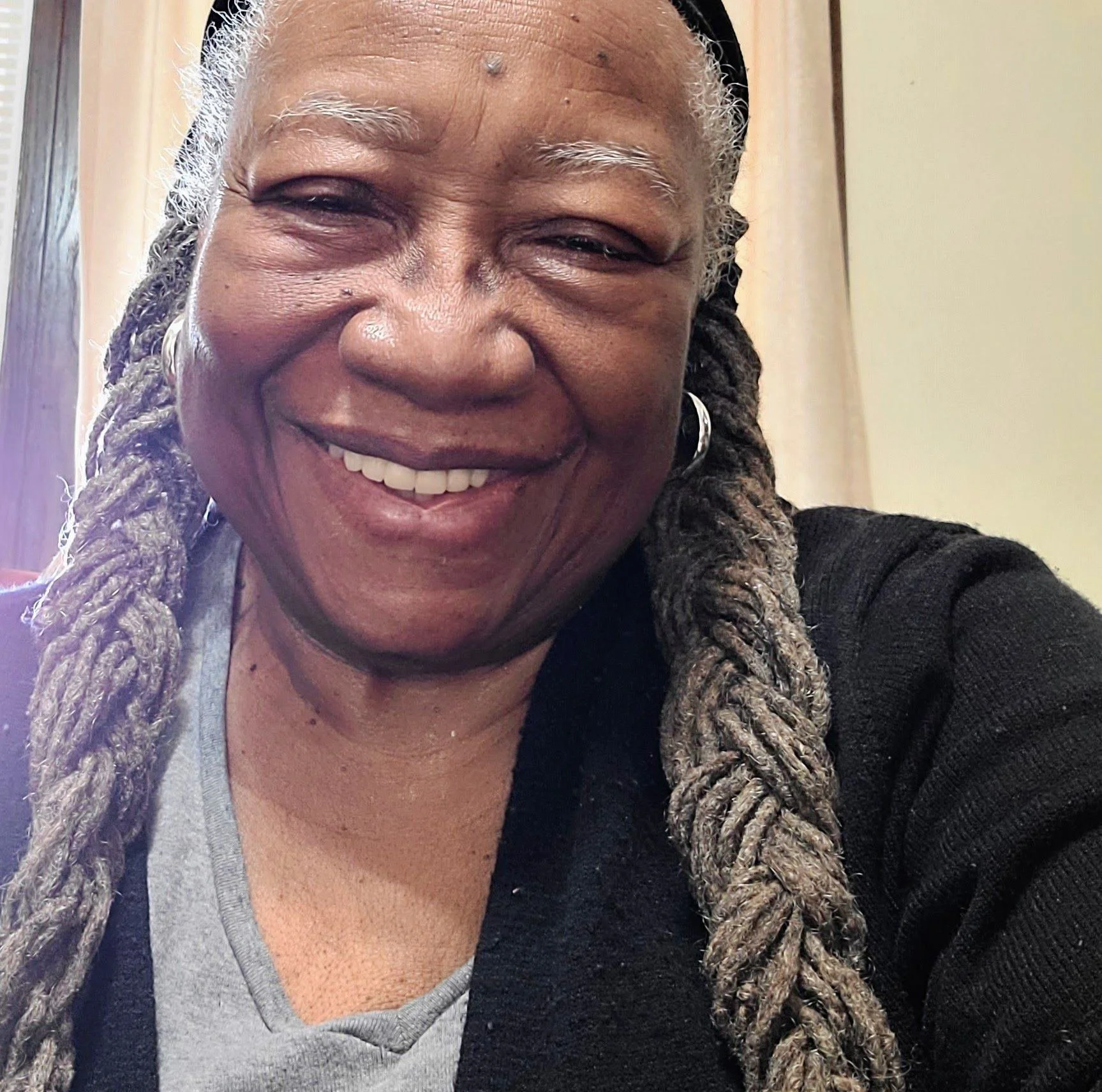
Following a rewarding career in government and public service, Elizabeth Blaney retired in 2008. She is a long-term resident of St. Albans, Queens where she raised her three daughters. Since retirement, she has remained active in local community affairs and currently serves on the board of directors for Neighborhood Housing Services of Jamaica (NHSJ), and the Community Block Association of St. Albans.As a member of SQREJC, and on behalf of the Community Block Association, Elizabeth is involved in efforts to repair and restore community driveways in her neighborhood. These driveways, commonly referred to as alleys, provide access to backyards and garages for a series of row houses. Built in the 1950s the driveways are considered privately owned, with shared responsibility for their maintenance and upkeep being that of the homeowners. For decades, their maintenance and upkeep have been sporadic. The recent increase in heavy rainfall has resulted in flooding backyards and basements. The standing water and ponding have increased mosquito infestation. The Community Block Association has initiated a fundraising campaign, advocated with local elected officials and governmental agencies to bring attention to the problem and to generate a public response to a problem that impacts a large number of residents.Elizabeth Blaney
Full Transcript
INTRO
This is The Climate Story Project— where we share real stories about how climate change is shaping our lives. Stories that connect us. Stories that move us to act. This is a project of the New York Climate Exchange, a non-profit organization that’s accelerating climate solutions through a unique partnership model and climate campus on Governors Island. In each episode, you’ll hear voices from different places and walks of life in our growing archive of personal climate stories, so that we can remember, reflect, and respond together.
The story you’re about to hear is from Elizabeth Blainey. Elizabeth is a member of the South East Queens Resident Environmental Justice Coalition. She is a leader on a local ground water community science project, as part of the Thriving Earth Exchange at the American Geophysical Union, a partner of the New York Climate Exchange.
LIZ
The thing I remember most about my childhood in Alabama is just being out of doors. All the time, out of doors. We never spent a day in the house unless it was raining too hard to be outside. We played jump rope. We used to play with marbles. We made scooters out of roller skates. We made mud pies. But most of my time was spent out of doors. I remember that.
And what I've come to realize– and I still have family in Alabama that I go to visit regularly– and I noticed the kids are never outside playing the way we were. You never see kids outside, you know, throwing the ball or jumping rope or doing any of the things that I did when I was a kid. And their parents are saying, “Oh, it's just too hot, you know, it's too hot for them to be out.” And I've come to realize that that's one of the impacts of the change in climate.
I moved to Brooklyn from Alabama when I was 13. I am a resident and homeowner of Southeast Queens, in the community called St. Albans. I've lived there for over 50 years and I've seen a lot of change. And I am now able to attribute some of those changes to changes in climate. We live in a section of the community that's made up of row houses. They are houses that are attached to one another. And because of that, the egress to our backyards is through something called a community driveway. We called them alleys. Our kids played in them when they were small. We didn't have to worry about them getting hit by a car. They could go in the backyard and from the backyard right into the alley and play, ride their bicycles, whatever. And you know, we had rainfall back then, just like we have rainfall now. But what we didn't have, that we have now, is intense heavy rainfall over periods of time that have created ponding conditions. And those ponding conditions have led to flooding in our backyards and in some instances flooding in our basements.
I'm coming to see, also, that the ponding conditions are creating infestation of mosquitoes. And so we are getting a lot more people complaining, you know, “I can't sit in my backyard. Those mosquitoes are eating me alive.” You know? And I bought those machines that you buy to zap them. I've bought the sprays and stuff and they just, I can't get rid of those mosquitoes, there’s so many of them. And it's a health condition, as well. Because even before I recognized the connection between the climate and the ponding and all that, we had something called West Nile virus that was associated with mosquitoes. And New York City was spraying the communities after dark to help combat. And one of the things they would say to us, “Make sure you don't have standing water in your backyards, that way you get rid of the opportunity for the mosquitoes to lay their larva and reproduce so quickly.”
So naturally, now that we have these gaping holes with water standing for days. The other thing I notice is that the water doesn't evaporate as quickly as it used to. For a couple of days now the water is standing. Whereas before you get a heavy rainfall, the next day there was no ponding, there was no flooding. We also know that in our community we have a rising water table, and so that also contributes. The water that would naturally evaporate, you know, there's some, some point at which they meet and the water just isn't gonna go any further down.
We are a small little community association. We are consisted, right now, of about six blocks of homeowners. So we've been working with the government, you know, looking for solutions to the problem. The primary response to us is that the community driveways are privately owned. You own them. You know, your deed says that where the intersection meets in the middle, you and that neighbor across from you own that. And it's your responsibility to maintain it. And, yes, those driveways do need to be maintained. The maintenance has just been deferred. People sometimes not understanding that that part of where they lived was privately owned. They thought if it was a street that cars rode down, that the city was responsible. Elected officials have tried to make them public, but somehow we are not able to do that. But we are looking at ways to assess property owners, uh, through property taxes. So that those community driveways can be maintained without placing an undue burden on individual homeowners.
One of the ways we have attacked our problem with the community driveways, we've started a fundraising campaign and we've partnered with a recycling company. And so we have little flyers out that say, rebuild our community driveways, a nickel at a time. And so we are asking everybody in the neighborhood, instead of putting your bottles, your redeemable bottles and cans into the garbage can, turn them into the recycling center and say there for the Community Block Association. And that way we can raise more funds to repair our driveways.
We have a lot of waste stations in our neighborhood. And so that has contributed to an increase in asthma amongst our children. And we are a part of a larger organization that is looking at where these places are sited and why they're so close to residential areas and what we can do about it. It's difficult because the zoning so far allows them to be in what they call manufacturing and industrial zones, and some of these zones are so near residential homes. There's a new legislation in New York City which relaxes a lot of the zoning rules, but it also makes it possible for all kinds of things to be in residential areas that we also don't want.
We do community cleanups annually. We thought that would be a great way to bring people together. And it worked, you know, to the advantage that people were able to really get their alleyways or their community driveways cleaned, because they were dumping sites. People who had stored their cars and sometimes abandoned them in the alleyways. So we got rid of a lot of the old cars that had been abandoned in the alleyways. There's still cars parked back there, but we know who owns them. And then we had a lot of dumping going on back there, you know, since we can't put into the regular garbage any longer, a lot of the electrical appliances. The TVs and those kinds of things. People just dumped them in the alleyway. Old bicycles without tires dumped in the alleyway. People who had old couches, you know, dumped in their backyards. We got rid of all of those kinds of things in the first few years of those cleanups. And those alleyways are, to this day, so much cleaner than they used to be.
You know, I never associated a lot of the issues that we are facing with climate action. There were other things that were responsible for them. I think what's really important is that people understand that it really does affect all of us one way or another. We may not see it immediately. Just talking to one another, just sharing the fact that the mosquitoes are a problem, you know, or the ponding water is a problem, or I can't bring my car back here 'cause it's flooded. You know? Those are the kinds of things I think that make a difference. And I think it also helps people to understand that, you know, it's not just one or two of us who are affected by this situation, but it really is all of us.
And when we stop to think about it and especially I think as we hear other people's stories, we get to reflect and see this is what's happening in my life and in my community that is similar to that. And may inform me, and I may want to go and get more information. You know, so there’s all kinds of ways, I think, for people to become informed about climate change. And it does make a community stronger because the more people who understand, the better it is to fight for whatever measures we need to in order to implement and make change.
OUTRO
This story is part of The Climate Story Project. To find more stories and learn more about The New York Climate Exchange, visit nyclimateexchange.org and follow us on LinkedIn and Instagram. This episode was produced by Kylie Miller. Thanks for listening.