Student
NY Harbor School
He/Him
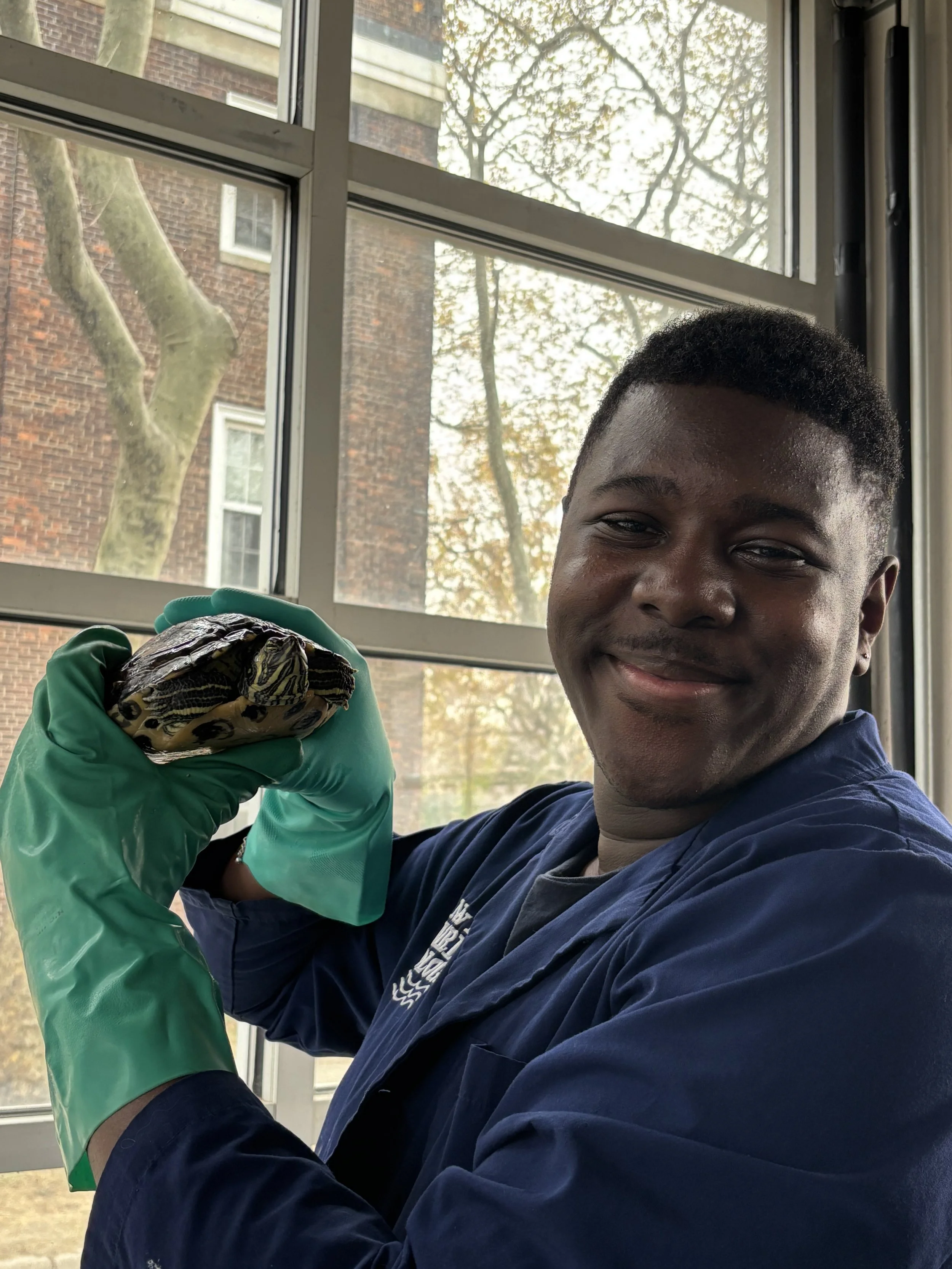
Dillon Pierre I’m an incoming senior in the fall, and I am currently enrolled in the New York Harbor school and I’m a part of the marine affairs and policy, advocacy program. Some words to describe me are hard working, skillful and outspoken.
Dillon Pierre
Full Transcript
INTRO
This is The Climate Story Project— where we share real stories about how climate change is shaping our lives. Stories that connect us. Stories that move us to act. This is a project of the New York Climate Exchange, a non-profit organization that’s accelerating climate solutions through a unique partnership model and climate campus on Governors Island. In each episode, you’ll hear voices from different places and walks of life in our growing archive of personal climate stories, so that we can remember, reflect, and respond together.
The story you’re about to hear is from Dillon Pierre. Dillon is a student at the New York Harbor School, a partner of the New York Climate Exchange.
DILLON
When I was like five to I wanna say 10, every birthday I would go to the aquarium. Like I would always wanna go to the aquarium. And I just found it so fascinating, like how these animals are just like swimming around. And I was so curious, like how this all worked. And then, it kind of was like a cool gift for me to go to Harbor School and do it every day. All the classes are based off like aquaculture, like aquatic animals or just like aquatic everything basically. So kind of different from a normal high school experience. I feel more connected to the ocean and in certain ways, I'm trying to save the ocean.
After school, it's like the after school program, I had to throw a bucket into the harbor, collect the water, and have these tools to tell me, like, the dissolved oxygen levels in the water. And then we send back the results and kind of like a slight form of like meteorology. We kind of know if it's high tide, low tide. Like why is it high tide, why is it low tide? And like predictions about what's coming next in the upcoming days or weeks.
With Harbor School, you get, like, the best of both worlds. You could like one day be doing marine biology, next day doing like underwater welding, or like scuba diving or anything. It's always something new every day and I love it. The Harbor School is on Governor’s Island, so I was super like, you know, excited about that 'cause what school was on the island? I grew up in Brooklyn and I had never seen Governor's Island before. Governor's Island is like, a multiple like hub for everything and everyone. We have like the Harbor School where I go, we have BOP, Earth Matter Farms is over there, and the Coast Guard pops by every once in a while. So I feel it's like a big community working together. You feel really good going there every day.
Well, I get on the ferry at eight o'clock and it's like a good five minute walk from the boat to the school. And it's very aesthetic, like the walk there. So it kind of feels like a postcard that you're in every day, especially like in the fall or like winter with the snow. It's like so picture perfect. Like there's always like, so many vibrant trees. The people there are so nice. So it's like, you just feel like welcomed. And then once you get to the building, I feel like the atmosphere changes. It gets more greener. Although there's like trees everywhere, but like, the farm that we have on the school property, brings like more life to it. The best view is on the island. You get to see the Statue Liberty. Going on the boat, going back from Governor's Island, you get to see the helicopters land on like the helicopter pad area.
Freshman year, I was, you know, coming home after school and the trains were delayed. I'm like, okay, that's like normal. It's raining. Like, okay, a little delay here. And it was like an hour, two hours. I was like, okay, so we're kind of like stuck right here. And I tried to call the Uber. It was so crazy. And I was like so scared, 'cause like I don't live in Manhattan and I never experienced this. And I'm like far away from home. First time ever seeing this big of a flood. And it was like– not to sound dramatic– but it was kind of traumatic. Like that whole situation. Like I was just like scared, 'cause like everything was flooding and like the streets were flooding. It was like, okay. Like, whoa.
Seeing all the different climate effects that's been happening recently and throughout the year, kind of gets a little scarier and scarier each time it happens. It's like, whoa, like what's really going on? Like this is something really serious and like it kind of gets really dark to think about fully. The reality that we have to live in. You know, we don't have to live like this, but this is how it is right now and it's terrible.
My CTE now is like Marine Politics. How I view it is like a major in college. So I get to advocate for the marine life and the marine environment. In freshman year we get a big old list and we get to pick one. We have to write an essay like why we’re passionate about this and why we think we'd be a good suit for it. At first, I thought I picked the wrong one. Like marine politics. I thought I picked the wrong one 'cause I was like, I love to talk, but I feel like I can't do it in front of a bigger audience. Well, that point of view has changed once I went to city hall and advocated for compost bins on the streets and like rat mitigation.
It was very intimidating. It was like a school trip and we had like a month before to like get our testimonies down and like figure them out and write it out and like practice it. It felt like I was kind of like an actor. Like I had to rehearse every day after I finished it, like revised it and everything. So the day of, we get there and it's very like, official, official. I’d never been inside city hall. I always seen it. I know what happens in there. But I guessed the feeling in the room would be different. And it was very intense and, although it was intense, it was great to hear what everyone else thinks about the situation, like the rat mitigation and composting. I was like, wait, we're all on the same page here, and I kind of love it, you know. I did my testimony. It was two minutes, it was timed, with a big red clock in front of me and like four cameras. And I was like, okay, like I got this. And I said my piece and I felt really accomplished, and I felt like I'm making a significant step in the right direction for everyone. And now around Manhattan and Brooklyn, I see like a bunch of compost bins on every corner next to a trash can or like next to a lamppost. I'm like, okay, so what I said was heard and they acted on it. And I love it.
I feel like a superhero in a way. Like I spread so much awareness to, like people in my school that don't really understand it or care to know. I'm like, still, let me tell you about this. Or like, people, like my mom or like, my family, I let them know like, what's going on. They're like, “I had no idea” and like, “We're gonna start doing this differently.” I feel like it's had a good change on like my lifestyle. The downside of it all is my age. I feel like me being so young, people don't take it as seriously. You know, I might be younger than what you think someone should be talking about this should be, but I'm like, we still know the same thing no matter our age. So I feel like you should listen to anybody who tells you about this type of stuff.
OUTRO
This story is part of The Climate Story Project. To find more stories and learn more about The New York Climate Exchange, visit nyclimateexchange.org and follow us on LinkedIn and Instagram. This episode was produced by Kylie Miller. Thanks for listening.