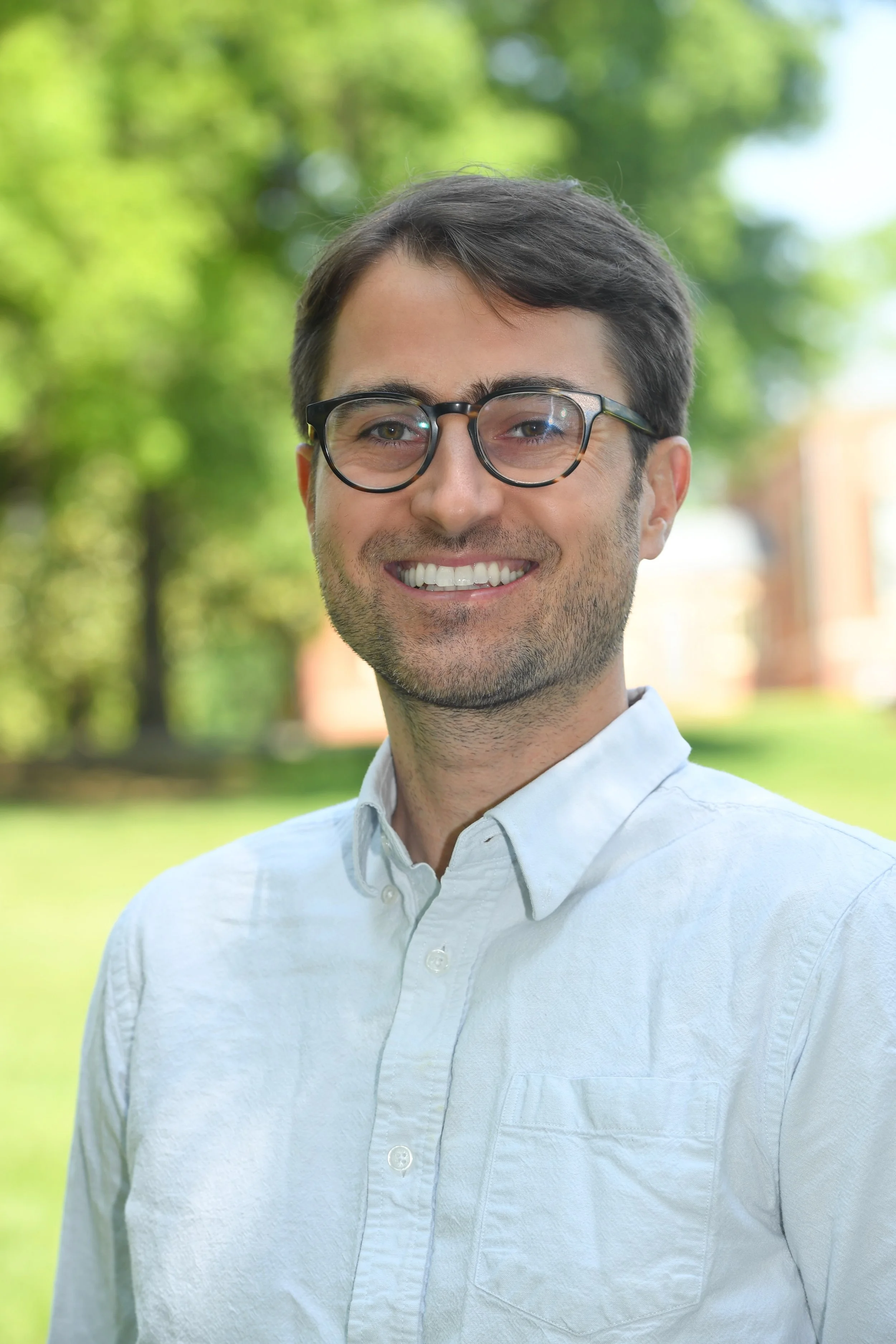
Post Doctoral Fellow
Melting Metropolis, Queens College, CUNY
He/Him
I'm an urban and environmental historian of the 20th century US. I study heat, health, housing, and inequality in New York City, particularly after World War II. I'm a postdoctoral research fellow at Queens College, CUNY, and I'm part of an international research project shared between Queens College and the University of Liverpool, titled "Melting Metropolis: Everyday Histories of Heat and Health in London, New York, and Paris since 1945" https://www.meltingmetropolis.com/ Daniel Cumming
Full Transcript
INTRO
This is The Climate Story Project— where we share real stories about how climate change is shaping our lives. Stories that connect us. Stories that move us to act. This is a project of the New York Climate Exchange, a non-profit organization that’s accelerating climate solutions through a unique partnership model and climate campus on Governors Island. In each episode, you’ll hear voices from different places and walks of life in our growing archive of personal climate stories, so that we can remember, reflect, and respond together.
The story you’re about to hear is from Daniel Cumming. Daniel is a post-doctural research fellow with the Wellcome Trust funded Melting Metropolis project at CUNY Queens College, a partner of the New York Climate Exchange.
DANIEL
I grew up on a tiny rural island on the Canadian border, only accessible by state ferries or seaplanes. And it's small enough, there were 84 kids in my graduating class. There was like one school system, no stoplights, no chain restaurants. Like it was tiny. But that really gave me, you know, the benefit of being really outdoorsy as a kid. You know, learning how to live and work on the water, um, and on the docks. And it's also very, like, agricultural, so, you know, working in the fields and that kind of stuff was also part of my summertime experience. Our summers were, um, really idyllic. There was no humidity. We filled our time by, as kids, going to the beach or swimming in ponds. You know, being able to be outside comfortably.
Sure it was hot, but there was shade. There was water. There's ways in which you can cool there. But all of these were sort of like natural breaks from the heat. We didn't have the need for technologies like air conditioning. And in some ways that idyllic experience of summer put some blinders on, you know, my eyes as far as like how other people experience summers and extreme heat and humidity. You know, not everybody has the privilege of being able to go to the local watering hole to go swimming. You know, a lot of people end up working in the heat.
When I moved to the East Coast from the Pacific Northwest, I didn't really know what humidity was. It wasn't until I stepped literally off the plane in the dead heat of the summer and, you know, felt it in my body in ways that, you know, growing up we didn't have that sort of moisture in the air. I felt like I was, you know, swimming in some ways. I was in Baltimore when I first experienced it. And Baltimore has a different humid summertime experience than New York City is even. Uh, New York is hot. Baltimore is sweltering in the way that it is kind of this harbor and part of the Chesapeake Bay, um, ecosystem. And when I realized how enveloping humidity can be and the extreme heat that comes with humidity, um, I started to really kind of think of how that is experienced by, you know, people who live in cities and live in places where you easily travel between scorching hot sidewalk and intensely air conditioned building, and your bodily systems have to navigate the transition between the two.
Realizing how intensely I was feeling as a younger person made me also think about how intensely maybe people who are experiencing different sort of health vulnerabilities or, you know, just vulnerabilities of where they’re living, the built environment, um, you know, whether or not their homes are safely and adequately weatherized, and whether or not there is just a place in which there can be a break from the heat. I saw a lot of people living outdoors, unsheltered, exposed. And not to say that that's not, wasn't part of my experience growing up in the greater Seattle area, but thinking about it in terms of, um, heat, uh, and, and humidity, within the context of climate change was I think a new, a new perspective for me and one that I think was really eye-opening in a lot of ways.
I think I didn't start to realize or at least connect the dots about how significant heat was within this larger matrix of climate change, um, until maybe even 2021 when it hit home in a literal way. There was the Pacific Northwest Heat dome of that summer, turned out to be incredibly deadly. A lot of times it's the elderly, the young, the most vulnerable among us who, you know, succumb to heat related stress. Often alone, often without people checking in on them. I don't know the exact number, but it was thousands of people over, you know, I think a long heat wave that lasted, uh, maybe for a week or so. You know, in my neck of the woods. In my hometown where I grew up without air conditioning. I experienced that remotely. I was on the East coast again, my parents were back home. We were on the phone a lot talking about how just intolerable the heat was, um, how people were taking care of one another, how people were looking out for one another. It was kind of a profound experience for me, even though I wasn't personally there. I was, you know, witness to it and starting to ask these questions, you know, 3000 miles away as an academic. And then there you go, my hometown is also experiencing extreme heat in a way that they never have.
New York is really on the front lines of dealing with this issue. The city of New York is realizing that, you know, heat is a silent killer. It's deadly on a scale that we are still kind of grappling with. Heat kills more people every single year than all other natural disasters combined. In New York City, it kills 580 people per year, and this was a number that was revised within the last year or so. I am a part of a large project called Melting Metropolis. A big part of our work is thinking critically and historically about the urban heat island effect. Um, and this is very simply the idea that cities are much hotter than their surrounding suburban or rural landscapes. And this has a very, uh, material reason. Just the infrastructure, the density, the materials used to build a city and thus also kind of create heat dome with within the city space.
But it also has a very kind of socioeconomic dimension to it as well. Our cities are built incredibly unequally, socially. So people who live within these inequities are also being exposed and experience heat inequity on a different scale. Even within the same city, perhaps even, you know, a block or two removed from one another. There's both a environmental and a social dimension to how people experience heat. As much as we like to kind of frame climate change as this shared experience that we're all in together, that's only true to a certain extent. It's one that is not shared equally. In fact, black New Yorkers die at a rate double of white New Yorkers when it comes to heat related stress and mortality.
So it's really, I think, incumbent on us to ask questions of how we got here, why we are still here, what sort of, you know, future oriented policies we need to be thinking about to both remedy the deadly effects of climate change today, but also start to think more and more upstream and to the future about how we can, um, mitigate these effects and really curb some of the most severe outcomes that we're seeing every single day. Every single summer, it's getting hotter and hotter. We're breaking records every year. It's only gonna get worse.
It can be really depressing. And from the young folks I work with and read about, as well, it can be really anxiety provoking. It doesn't have to be. Avoid the doom and gloom. I mean, there can be a lot of joy, and there can be a lot of excitement, and a lot of purpose in your life when you are organizing and fighting together for what you believe in. I think there can be a lot of, um, rewarding, joyful work, uh, in that struggle.
So my relationship, I think, with the environment has changed in dramatic ways over time. But like one of the central themes has been we are all, like, environmentally meshed. There's no distinction between, you know, urban space and nature. You know, like nature is all around us. We are nature. Everything is nature. We are all environmentalists whether we recognize it or not. I think increasingly about the worlds in which we inhabit, the worlds that we build, the futures that we imagine, and I, I think it really helps to think of human worlds and the built and natural environments as like deeply intersected with one another.
OUTRO
This story is part of The Climate Story Project. To find more stories and learn more about The New York Climate Exchange, visit nyclimateexchange.org and follow us on LinkedIn and Instagram. This episode was produced by Kylie Miller. Thanks for listening.